Sri Lanka
 USA
USA Canada
 India
India UK
UK UAE
UAE




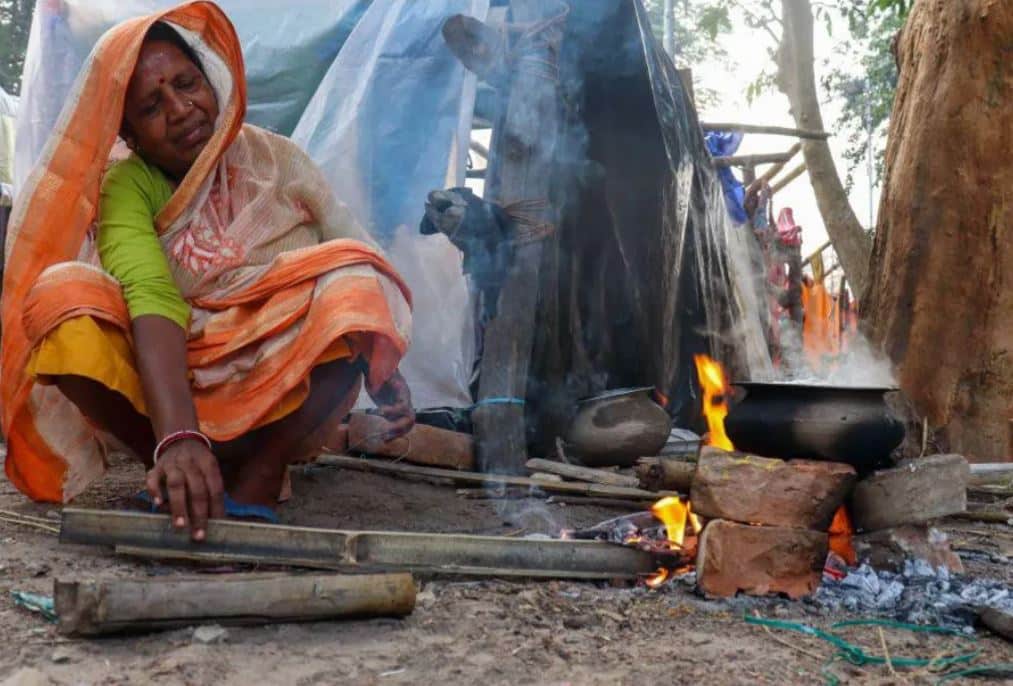
Shipping slowdowns caused by the ongoing US-Israel-Iran conflict are tightening gas supplies to India, prompting concerns that households and businesses may temporarily revert to more polluting energy sources like coal, kerosene, and biomass, according to energy analysts.
Recent reports indicate that some areas of India have seen higher sales of firewood and cow dung cakes, traditional biomass fuels, as residents seek alternatives to scarce cooking gas. Panic buying of LPG has been reported in multiple regions over the past few days.
The conflict, which began on February 28, has disrupted maritime traffic through the Strait of Hormuz, a key transit point for roughly one-fifth of global oil and gas shipments. This crucial waterway accounts for about half of India’s liquefied natural gas (LNG) imports and nearly all of its LPG deliveries.
Indian authorities are pursuing diplomatic talks with Iran to ease the supply disruptions. Since Monday, three Indian-flagged vessels — two carrying LPG and one carrying crude oil — have reached Gujarat, while approximately 21 ships remain delayed, keeping gas supplies constrained.
To support vulnerable households, the central government has approved an additional 48,000 kilolitres of kerosene through public distribution channels. Petroleum Minister Hardeep Singh Puri confirmed that kerosene is being distributed via retail and PDS outlets to meet immediate household needs.
The Environment Ministry has temporarily allowed restaurants and hotels to use alternative fuels, including biomass, kerosene, and coal, prioritizing LPG for households and essential sectors for the next month.
Over the past decade, India has been actively promoting LPG use, gradually replacing kerosene and traditional biomass like firewood and dung. Still, with 60% of its LPG imported, India remains the world’s second-largest importer after China. Kerosene production has fallen from 7.5 million tonnes in 2014-15 to under one million tonnes in 2023-24, reflecting this transition.
Experts stress that the current reversion to kerosene, coal, and biomass is temporary. Nandikesh Sivalingam, director at the Center for Research on Energy and Clean Air, said, “Once LPG supplies stabilize, households are expected to return to cleaner fuels.” However, the short-term use of these traditional fuels can significantly worsen indoor air quality, increasing exposure to carbon monoxide, nitrogen oxides, and fine particulate matter.
Urban households may be more affected than rural areas due to limited fallback options. Some urban residents might instead switch to electric cooking appliances, which would raise electricity demand — much of which in India is still generated from coal.
Coal already supplies nearly 79% of India’s domestic energy, making any short-term shift away from gas a reinforcement of the country’s coal-dependent energy system. Rural households, meanwhile, may rely more on biomass, subsidized kerosene, biogas, or improved cookstoves where feasible.
Long-term solutions such as solar cooking systems, including photovoltaic-powered electric cookers, offer cleaner alternatives and could bolster household energy resilience. However, experts note that scaling up these technologies will take time, leaving coal as the most accessible fallback for now.