Sri Lanka
 USA
USA Canada
 India
India UK
UK UAE
UAE




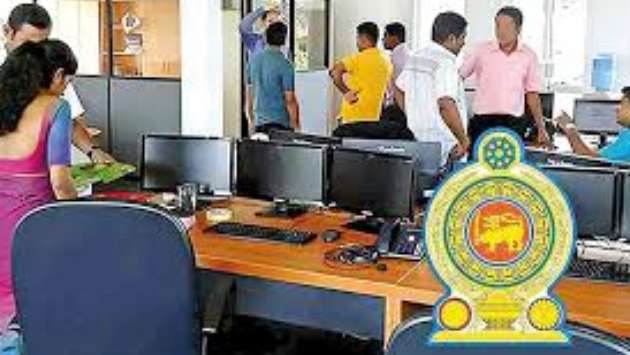
Sri Lanka is set to enter the 2026 fiscal year with close to a quarter of a million vacancies in the public sector, as the government reinforces its decision to halt large-scale recruitments despite significant staffing shortages in essential state institutions.
Sri Lanka’s public sector is expected to continue operating with nearly 250,000 unfilled positions in 2026, according to the Cadre Information of Public Sector 2025 report released alongside the fiscal position report. The findings reveal that while the approved cadre stands at 1.325 million, the actual number of employees as of June 30, 2025, is only 1,076,625 — a figure that excludes uniformed personnel from the Army, Navy, and Air Force. This indicates that the overall salary burden on the state is substantially higher when military payrolls are added.
Though 248,498 positions remain vacant, the government has taken a firm stance against broad recruitment campaigns in the upcoming fiscal year. The Budget, Economic and Fiscal Position Report 2026 clearly states that the public sector workforce “will not be considerably increased through new recruitments in 2026.” Instead, the state is grappling with a rapidly rising wage bill, driven not by increased hiring but by significant salary revisions. Expenditure on personal emoluments soared by 15.3 percent to Rs. 760.7 billion during the first eight months of 2025.
One of the most critical concerns highlighted in the report is the shortage of personnel in key revenue-generating agencies. The Department of Inland Revenue has 555 vacancies, Sri Lanka Customs has 841, and the Department of Excise has 584 — gaps that may hinder the government’s ambitious revenue targets for 2026.
The Provincial Councils remain one of the largest employers in the state sector with 398,340 actual staff members, while Central Government institutions employ 448,982 individuals. However, the Ministry of Public Security faces one of the most significant deficits. The Sri Lanka Police has an approved cadre of 102,100 but operates with only 74,731 officers, leaving a shortfall of over 27,000 personnel. In contrast, the Presidential Secretariat functions at full capacity with all 602 approved positions filled.
Among State-Owned Enterprises (SOEs), employment stands at 156,294. Major employers include the Sri Lanka Transport Board with 24,679 employees and the Ceylon Electricity Board with 22,021. Other significant institutions include the Sri Lanka Ports Authority (8,527 employees), Bank of Ceylon (7,367), People’s Bank (7,316), SriLankan Airlines (5,441), and the Ceylon Petroleum Corporation (1,920).
A notable concern is the staffing crisis at the Commission to Investigate Allegations of Bribery or Corruption (CIABOC). With only 238 actual employees out of an approved 836, the institution functions with less than 30 percent of its sanctioned workforce — a worrying statistic amid the government’s ongoing anti-corruption push.
With the 2026 national budget reinforcing the freeze on new recruitment, the state appears to be shifting its focus toward digitalization and expanding IT-based solutions to boost efficiency instead of filling the nearly quarter-million vacant positions across the public sector.