Sri Lanka
 USA
USA Canada
 India
India UK
UK UAE
UAE




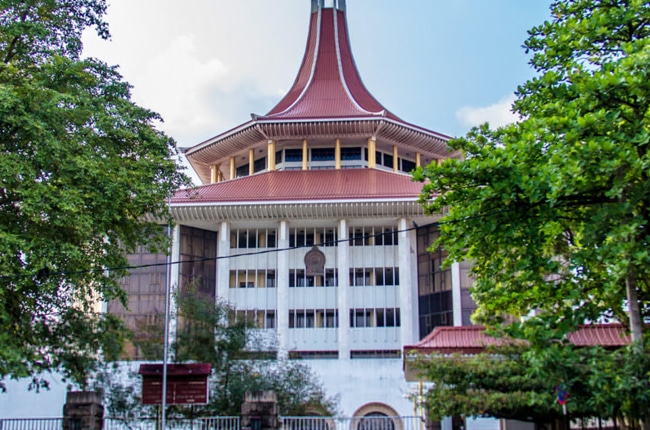
The Supreme Court of Sri Lanka has reached a major milestone in its digital transformation journey with the introduction of its e-Filing Portal under the e-Courts Project. The initiative reflects the Court’s continued efforts to modernise judicial processes and improve the delivery of justice through technology.
The e-Filing Portal was officially launched for public use on February 10, 2026, allowing attorneys to submit cases electronically. Since its introduction, several cases have already been successfully filed through the system, highlighting its efficiency and growing adoption within the legal community.
On March 26, 2026, the Supreme Court achieved a historic milestone by conducting its first fully electronic, paperless proceeding in open Court. This marked a major advancement in the transition towards a fully digital Judicial system.
The first case to be handled entirely through the e-Filing system was SC Contempt 03/2026. In this matter, all parties utilised digitally submitted documents. The Registrar of the Supreme Court formally read the charge sheet in open Court, digitally signed the document, and uploaded it to the system in real time.
The charge sheet was immediately accessible electronically to both the Counsel for the Respondents and the Counsel for the Attorney General’s Department for perusal.
The present contempt proceedings arose from the non-compliance with the judgement of the Supreme Court delivered on December 31, 2024 in Fundamental Rights Applications, which concerned the leak of the Grade 5 Scholarship 2024 examination paper. In these cases, one of the Respondents was directed to pay Rupees Three Million (Rs. 3,000,000) as compensation to the State. The Respondent’s failure to comply with the Court’s order led to the institution of proceedings in SC Contempt 03/2026.
The proceedings were presided over by Chief Justice Preethi Padman Surasena, together with Justice Arjuna Obeyesekere and Justice Dr. Sobitha Rajakaruna, Judges of the Supreme Court.
The occasion was attended by Supreme Court Registrar Manodhi Hewawasam, Deputy Registrars Abhimani Seneviratne and Tharindu Weerasena, along with members of the IT division and staff of the Supreme Court of Sri Lanka. The development of the system was also supported by Uvindu Anuradha of Sri Lanka Telecom (SLT-Mobitel), who played a key role in building the e-Filing platform.
The introduction of the e-Filing system marks a significant step toward a more efficient, transparent, and technology-driven judiciary. It is expected to streamline court procedures, reduce reliance on physical documentation, and improve overall case management, aligning Sri Lanka’s judicial system with global standards in digital court administration.
Legal professionals are also expected to increasingly adopt the platform, as it offers a more cost-effective alternative to traditional paper-based filing systems. Preparing extensive appeal briefs and court documents typically involves high costs, including printing, paper, toner, file materials, and other related expenses.
By shifting to electronic filing, the judiciary is expected to achieve substantial cost savings while also improving efficiency and promoting environmental sustainability.
As the Supreme Court approaches its 225th anniversary, the initiative stands as a reflection of its forward-looking vision. The Court has reaffirmed its commitment to further advancing digital transformation and accelerating the modernisation of judicial services across the country.