Sri Lanka
 USA
USA Canada
 India
India UK
UK UAE
UAE




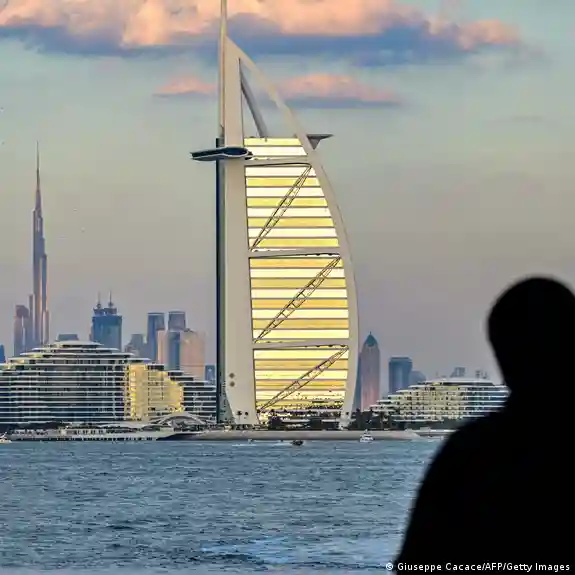
Social media influencers based in are facing criticism online after posting videos that appear to downplay or avoid addressing the recent Iranian missile strikes on the .
A viral trend circulating on Instagram and TikTok shows expatriates enjoying scenic moments in Dubai while a caption asks: “You live in Dubai, aren’t you scared?” — referring to the escalating conflict linked to the .
The videos then display the response: “No, because I know who protects us,” alongside images of and his son .
The trend, often accompanied by a remix of the song by , quickly spread across social media platforms, prompting users to question whether influencers were being paid to promote pro-government messaging.
Several influencers denied the claims, insisting their posts were personal expressions rather than coordinated campaigns.
Strict rules on influencer content
Influencer activity in the UAE is tightly regulated. Since 2025, the government has required social media creators to obtain licenses from the to produce online content.
Following Iran’s retaliatory missile and drone attacks on the UAE, authorities warned residents against spreading rumors or unverified information online. Under UAE law, publishing misleading content can lead to fines of up to AED 200,000 and possible imprisonment.
Officials also cautioned people against reposting outdated or misleading footage, especially after old videos of fires were circulated online as alleged evidence of damage from the attacks.
Influencers caught between fear and restrictions
Some influencers shared emotional reactions to the explosions heard during the strikes but later removed their posts.
German influencer Nathalie Bleicher-Woth said in a now-deleted video that she was unsure what she was allowed to say online, while others admitted they had deleted posts due to concerns about violating local laws.
Meanwhile, some personalities continued posting luxury lifestyle content despite the tensions, highlighting the challenges of balancing social media branding with the sensitive political environment.
Economic image at stake
Experts say Dubai’s global reputation as a safe business and tourism hub is crucial to its economic model.
According to analyst Jim Krane from Rice University’s Baker Institute, prolonged conflict in the region could affect the emirate’s attractiveness to foreign investors and expatriates.
With around 90% of Dubai’s population made up of foreigners, maintaining the city’s image of safety and stability remains a priority for authorities and businesses alike.