Sri Lanka
 USA
USA Canada
 India
India UK
UK UAE
UAE




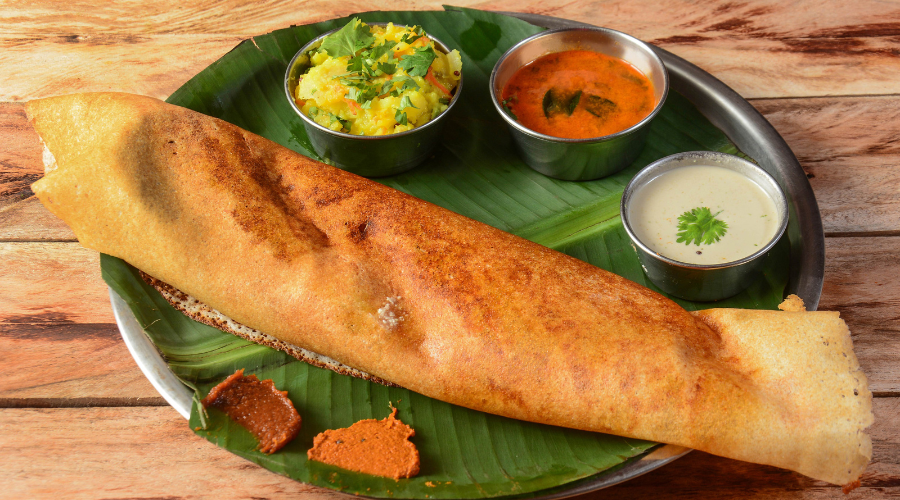
There’s perhaps next to no one in India who wouldn’t know exactly what you’re talking about when the word ‘dosa’ is mentioned. But now, the rest of the world is in on the obsession too.
According to TasteAtlas’ May 2026 rankings of the 100 best pancakes in all of the world, dosa—multiple varieties of it—make numerous, significant appearances. The top-most starrer? Masala dosa, of course. The traditional South Indian staple ranked sixth on TasteAtlas’ list, earning a rating of a whopping 4.3. Featuring a paper-thin dough stuffed with spicy potatoes, served with sambhar and chutney, masala dosa is among the most classic dishes originating from the Southern parts of India. As for accounts, the dosa dates back almost 2000 years in South Indian history. And as of May 2026, it’s one of the highest-ranked savoury pancakes in all of the world.
Following behind closely was dosa as a category of its own, appearing at number 15 with a 4.2 rating, while the ultra-crispy paper dosa secured the 35th spot with a 4.1 rating—placing India firmly on the worldwide map for pancakes as a delicacy. In fact, the list even goes as far as to highlight our fast-paced climb up the global ladder as far as influence in food is concerned. So yes, as this list goes, dosa is a global favourite, and we wouldn’t dare disagree!
According to the entry for the South Indian favourite, TasteAtlas described the masala dosa as “a batter of soaked rice and lentils that is baked into a thin pancake and usually stuffed with potatoes, onions, and mustard seeds.” It further described the many variations it comes in, including mysore masala dosa, rava masala dosa, onion masala dosa, and paper masala dosa.
Interestingly enough, according to TasteAtlas, dosa has even made the Huffington Post’s list of 10 foods to try before you die, so this ranking comes as no surprise.
What is TasteAtlas’ List All About?
TasteAtlas is a global food guide first founded by Croatian journalist and entrepreneur Matija Babić. Launched in 2018, the platform serves as a digital atlas of dishes, ingredients, and eateries worldwide. Unlike other platforms, TasteAtlas uses user ratings filtered to prioritise genuineness and informed reviews while minimising bias and spam. It also draws on research into culinary history and regional authenticity, combining crowd-sourced opinion with curated food knowledge.

Among its many lists is the one in question, ranking the best pancakes in the world. The fascinating part is that it doesn’t take the word ‘pancake’ in the most straightforward sense. Instead, it takes a broader view of what a pancake can be, including both sweet and savoury variations from across cultures.
According to the May 2026 list, the Latvian potato pancakes (kartupeļu pankūkas) came in at number 1, followed by sweet French crêpes at number 2, and crepes in crêpes at number 3. Number 4 was Nutella crepes, also from France, and we all understand why exactly they’re so loved. At number 5 was the Jianbing from China, a savoury, fried pancake commonly consumed for breakfast. Finally, at number 6, our favourite dosa held its head high.
A Brief History of Dosa
Most food historians trace the origins of dosa to southern India, particularly Tamil Nadu. In fact, the earliest references to dosa appear in ancient Tamil literature from the first millennium CE. However, that far back, the dosa was quite different from the crisp, paper-thin version we know and love today. Instead, it was thicker, softer, and made primarily from rice and black gram (urad dal), fermented naturally to develop flavour and digestibility. Fermentation, in fact, is key to dosa’s identity—it not only gives the batter its characteristic tang but also makes it easier for the body to absorb nutrients.

With time, the dosa evolved and spread across neighbouring regions like Karnataka and Andhra Pradesh, and each region put its own spin on the delicacy. In Karnataka, the batter began to be ground finer and spread thinner, eventually giving rise to the crisp, golden dosa that’s now most widely recognised. It’s also here that the iconic masala dosa—filled with a spiced potato mixture—gained popularity, particularly in the Udupi region, where temple kitchens and local eateries played a significant role in popularising the dish.
A wave of South Indian migration in the 20th century brought the culture of tiffin meals to cities like Mumbai and Delhi, which featured idli, vada, and the iconic dosa. And hence, these meals turned the delicacy into a household favourite. Udupi restaurants, in particular, played a crucial role in introducing South Indian cuisine to North India, offering affordable, vegetarian meals that were comforting and quick to prepare. And so, what started regionally soon became part of the everyday urban food landscape; available everywhere from the streets to fancier restaurant set-ups.
As the dosa travelled, it adapted to the times, and today it exists in countless forms. While the relatively common and authentic forms include paper dosa, set dosa, neer dosa and rava dosa, modern menus have taken even more liberties, filling dosas with everything from cheese and paneer to schezwan noodles and chocolate. While purists might raise an eyebrow (and they do), these reinventions are a testament to the dosa’s versatility and enduring appeal.
Source: https://oteats.outlooktraveller.com/