Sri Lanka
 USA
USA Canada
 India
India UK
UK UAE
UAE




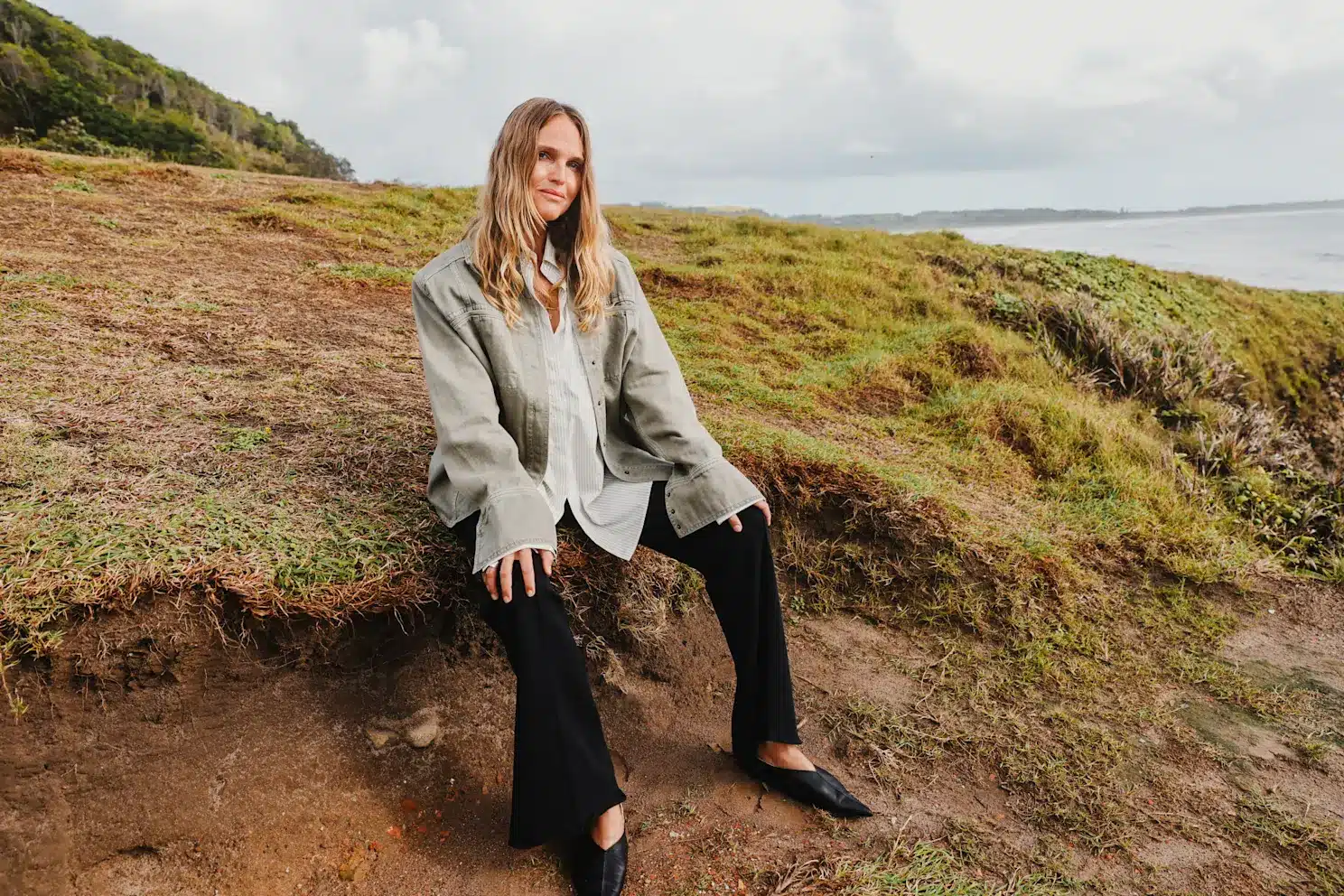
As consumers increasingly prioritise natural fibres like organic cotton and cashmere for their sustainability and premium appeal, one category continues to lag behind—activewear.
Byron Bay designer Laura May co-founded Nagnata in 2015 after struggling to find non-synthetic workout clothing that met both performance and style expectations.
“There were very few brands in the activewear space using organic or natural fibres,” she explains. “While organic cotton existed, it wasn’t suited for performance wear—it lacked compression, and stylistically, it wasn’t what I wanted to wear.”
Knowing wool has many natural properties – odour resistance, temperature regulation and quick drying – that make it well suited to activewear, May reached out to global wool authority Woolmark for help in developing a seamless merino product that could mimic the stretchy qualities of synthetics.
More than a decade on, Nagnata has become one of Australia’s most popular high-end activewear lines. Yet it remains an outlier in its use of natural fibres.
Before the mainstream adoption of Lycra (or Spandex, both brand names for elastane) in the 1980s by way of leggings and leotards, what people wore to exercise was less defined. In the 1920s, for example, female tennis players favoured loose cotton dresses or separates.
Fast-forward to 2026, and exercise wear – a billion-dollar category in itself – can feel like the last frontier of the fashion industry’s sustainability push, although slowly, brands like Nagnata are leading the change.
Trend forecaster Tully Walter sees growing consumer appetite for “natural” activewear as driven by sustainability concerns as well as “rising plastic and petrochemical anxiety”.
Growing media coverage on microplastics and documentaries such as Netflix’s The Plastic Detox are raising awareness—and concern—about the potential impact of these tiny particles on human health, even though scientific research is still in its early stages. As a result, consumers are becoming increasingly mindful of what they put both inside and on their bodies.
Broader lifestyle trends are also influencing choices in activewear. According to Walter, Gen Z is rejecting the “homogenised aesthetic” of traditional activewear—think Millennials’ staple black leggings—in favour of gear that expresses individuality, including vintage-inspired athleisure.
Industry shifts may accelerate this move toward sustainable and distinctive activewear. Last week, Lycra filed for bankruptcy, citing declining demand and competition from cheaper, generic alternatives. At the same time, The Business of Fashion has reported that rising oil prices could push up the cost of synthetic fibres, which are derived from fossil fuels.

“What’s fascinating about the activewear market is that it’s inherently associated with health and wellbeing,” Walter notes, making consumers increasingly receptive to plastic-free, eco-conscious alternatives.
Dr Nga Wun Li, a fashion and textiles researcher at the University of Technology Sydney, says the biggest advantage of synthetic fibres is their endless adaptability.
“If we want a fabric that’s water-repellent, or rainproof or stretchy, then we can change the shape of the fibre to allow this special function in the fabric,” she says.
While materials like bamboo or cotton have some elasticity, Li says this is often not enough compared to synthetic options.
All the synthetic fibres Nagnata does use are recycled, something May says was hard to come by at the beginning. As a small business with finite resources, sourcing something like recycled nylon (now fairly common) was a waiting game.
“It’s a shame because the companies that can be affording to do this and be innovating in this space – the Nikes, Lululemons – have the money and volume,” she says, explaining a completely synthetic-free yarn is the next benchmark to strive for.
“So, it actually is them that need to make the shift in their supply chain, sourcing and yarn choices because then all the [smaller] brands like ours can tap into that … So that was my pain point from so early on because none of this was accessible to me.”
Some major players in the activewear industry are starting to embrace sustainability. For example, Lululemon announced a partnership last year with Australian textile company Samsara Eco to expand its use of recycled fibres.
Dr. Lisa Lake, director of the UTS Centre of Excellence in Sustainable Fashion + Textiles, believes the industry is gradually moving closer to plastic-free alternatives for the synthetic fibres typically used in activewear.
Research into biosynthetics—fabrics made from renewable raw materials like corn and sugarcane—shows significant promise, though commercial viability is still pending.
Meanwhile, Laura May says Nagnata is actively developing a seaweed-based textile, reflecting the growing trend toward innovative, eco-conscious materials in performance wear.
ydneysider Ellie Tam started activewear brand Estroni during the pandemic. While she began with a range of synthetic-based bodysuits, last year, Tam pivoted to leggings, sports bras and bike shorts made primarily from merino wool.
“Figures like Dr Rhonda [Patrick, a biomedical scientist popular on social media], and Bryan Johnson [the American venture capitalist best known for his quest for immortality] are drawing light to these things and the issue of microplastics,” she says of the rebranding.
Most consumers today, Tam says, aren’t as conscious about the plastics in their clothing.
“Like, why isn’t anyone thinking about wearing plastic activewear to a sauna when you’re sweating, when your pores are open, or if you’re going to a hot yoga class?”
Tam points out that wool has long been favoured by certain athletes, like hikers and skiers, but is not yet synonymous with athleisure.
For Tam, then, a big part of the brand’s promotion has been around education.