Sri Lanka
 USA
USA Canada
 India
India UK
UK UAE
UAE




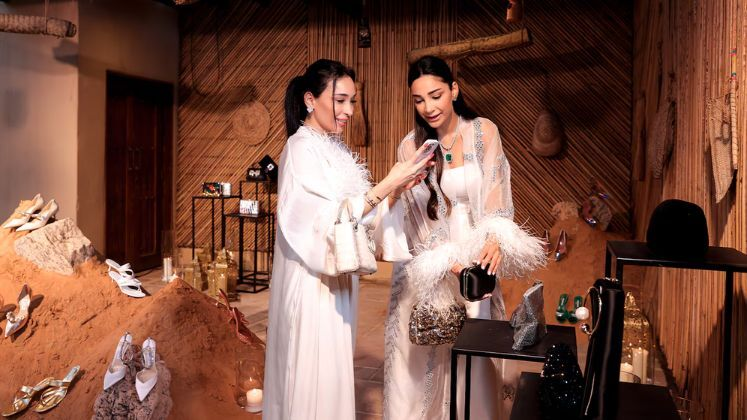
The luxury industry continues to rely on the Middle East’s affluent consumers to help counteract weakening in its primary US and Chinese markets, as Middle East airspace reopens and a ceasefire between Israel and Iran mediated by the United States seems to hold.
The Middle East has escaped a recent global slowdown in luxury sales, which is predicted to worsen this year, thanks to robust visitor flows and local affluence. Some companies have seen double-digit growth in sales in the region.
According to retail consultancy Chalhoub Group, luxury sales in the Gulf countries increased 6% to US $ 12.8 billion of the approximately US $ 400 billion industry last year, outperforming a 2% global decline. This was due to a robust demand for high-end jewellery, apparel, and cosmetics.
However, the growing tourism industry in the region is a major factor in that commerce; according to consultancy company Bain, between 50 and 60 percent of luxury sales in the Middle East originate from travellers.
With airlines cancelling flights and rerouting planes in response to Israel’s strikes against Iran on 13th June, actions that are now being undone, the start of an air war between Israel and Iran this month highlighted the continued dangers in an area where unrest was already seething.
Favoured by both wealthy Asians and Russian oligarchs, the region is a major destination for travel expenditures. Its significance has grown since Russia’s invasion of Ukraine led to sanctions and the rerouting of flights from more northern routes to the Middle East between Europe and Asia.
In India, where high tariffs have prevented companies like LVMH from growing their store networks, it also acts as a doorway for luxury brands to reach affluent consumers.
Prada saw a 26% year-over-year increase in first-quarter sales in the region, while Hermès saw a 14% increase.
Luxury jewellery and clothing companies have started launching new locations and throwing extravagant parties. This month, Milan-based menswear brand Zegna presented its spring collection in a lavish catwalk display that resembled an Italian villa at the opera house in Dubai, the area’s most prestigious luxury destination.
Last November, Elie Saab held a presentation in Riyadh to commemorate its 45th anniversary, which included a performance by Celine Dion.
Chanel held a dinner in Abu Dhabi in conjunction with a high jewellery launch, Louis Vuitton sent guests to the Dubai desert for a dawn feast, and Dior, Saint Laurent, and Valentino built stores in Bahrain last year.