Sri Lanka
 USA
USA Canada
 India
India UK
UK UAE
UAE




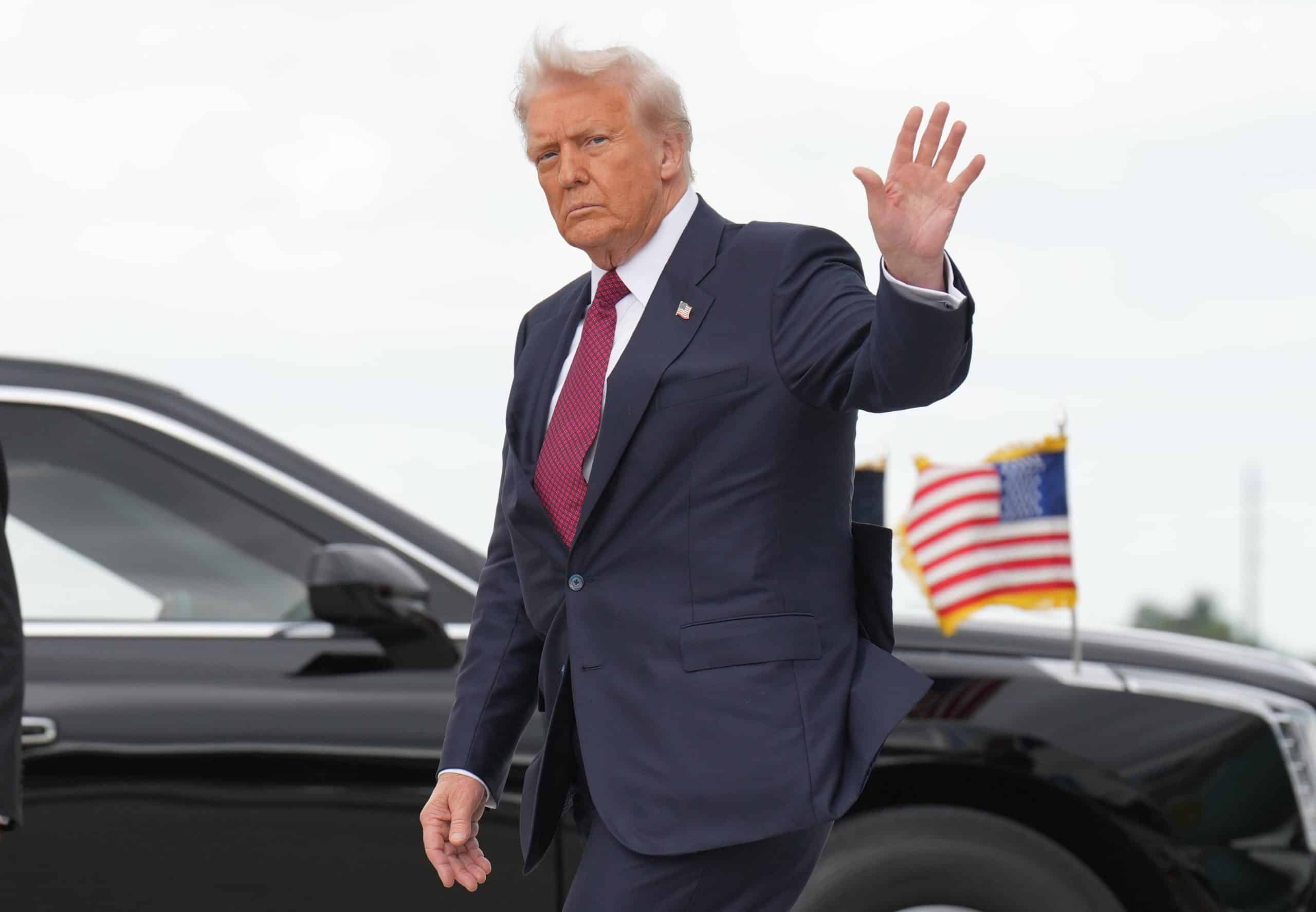
U.S. President delivered his first public explanation of the recent U.S. and Israeli military assault on Iran during a midday address at the White House on March 2, outlining his objectives while projecting confidence in the campaign’s progress.
Speaking from the East Room, Trump said the operation was running “substantially” ahead of schedule, originally projected to last four to five weeks. He did not provide a firm timetable but emphasized determination, saying, “Whatever the time is, it’s OK, whatever it takes.”
Four Stated Goals
The president specified four primary objectives for the campaign:
To eliminate Iran’s missile capabilities
To destroy its naval capacity
To prevent Iran from obtaining a nuclear weapon
To stop Iran from funding and directing proxy groups abroad
Trump argued that the strikes were necessary to prevent Iran from eventually threatening the United States with long-range missile capabilities. However, reports citing U.S. defense assessments have suggested Iran may be years away from developing missiles capable of reaching the U.S. mainland.
Notably, while Trump had previously encouraged regime change in Iran over the weekend through social media posts, he did not mention that objective in his formal remarks.
Domestic Skepticism
The address came amid mixed reactions at home. A recent CNN poll indicated that 59% of Americans opposed the military action, while 41% supported it. The survey also found that 60% of respondents believed the administration did not have a clear plan, and more than half predicted the strikes could increase, rather than reduce, the threat posed by Iran.
Iranian officials responded strongly to the U.S. action. Senior Iranian figure warned that Iran had prepared for a prolonged conflict and criticized what he described as U.S. escalation.
Broader Implications
The operation — reportedly named “Operation Epic Fury” — represents one of the most significant military confrontations involving Iran in recent years. Analysts say its consequences could reshape regional security dynamics and influence the trajectory of Trump’s second term in office.
The president did not address whether U.S. ground troops would be deployed but expressed confidence in success, stating, “We will easily prevail.”
The stakes are high both internationally and domestically, as past prolonged conflicts have demonstrated the potential to divide public opinion and impact presidential leadership.