Sri Lanka
 USA
USA Canada
 India
India UK
UK UAE
UAE




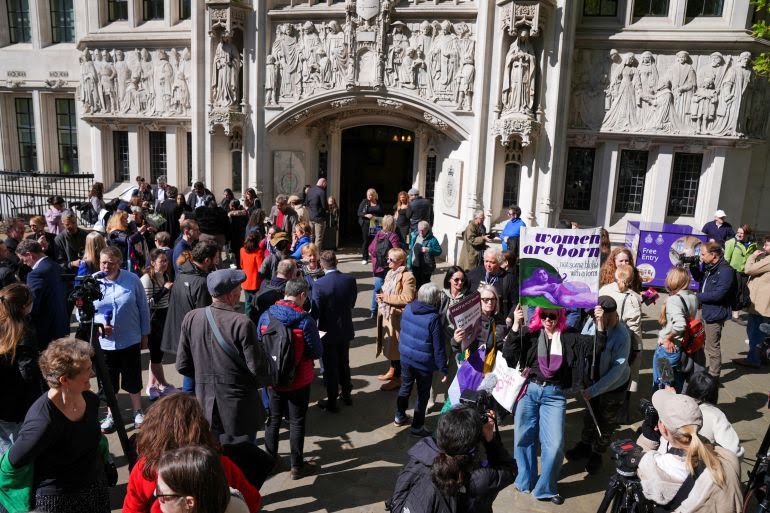
In a landmark ruling, the United Kingdom’s top court has clarified that the legal terms “woman” and “sex” refer to biological sex under the Equality Act, sparking intense debate between women’s rights advocates and transgender rights campaigners.
The Supreme Court of the United Kingdom has ruled that under the Equality Act 2010, the legal definitions of “woman” and “sex” refer specifically to biological women and biological sex. The ruling, delivered unanimously by Deputy President of the Supreme Court Patrick Hodge, has ignited both support and concern across the political and social spectrum.
At the heart of the case was the question of whether a trans woman possessing a Gender Recognition Certificate (GRC)—a legal document affirming gender identity—could be considered a woman under equality laws, particularly in the context of single-sex spaces like hospital wards, women’s refuges, and sporting events.
The case was brought forward by For Women Scotland (FWS), a campaign group that challenged guidance issued by the Scottish Government in 2018, which had stated that trans women with a GRC should be legally recognized as women on public-sector boards. Although FWS initially lost the case in Scottish courts, the Supreme Court overturned the decision, ruling in favor of defining “woman” as a biological classification under law.
Supporters of the ruling, including FWS co-director Susan Smith, welcomed the judgment as a significant step in affirming women’s rights and protecting sex-based spaces. “Today the judges have said what we always believed to be the case: that women are protected by their biological sex,” Smith stated to supporters outside the court.
The UK government also welcomed the decision, stating it brings much-needed clarity for institutions such as hospitals, shelters, and sports organizations. “Single-sex spaces are protected in law and will always be protected by this government,” a government spokesperson said.
However, the ruling was met with dismay by transgender rights organizations, including Stonewall, who warned of the potential for increased discrimination against trans people. A statement from a consortium of LGBT+ advocacy groups expressed deep concern over the judgment’s implications, emphasizing the importance of understanding how the ruling will affect legal protections going forward.
While the court clarified that trans people are still protected under the Equality Act from discrimination and harassment, campaigners like Ellie Gomersall voiced fears that the decision could erode the rights and dignity of the transgender community. “This is another attack on the rights of trans people to live our lives in peace,” Gomersall said.
Legal analysts have suggested that this ruling may increase pressure to revise existing equality legislation to reflect the evolving landscape of gender identity and legal protections.
#UKSupremeCourt #EqualityAct #BiologicalSex #TransRightsUK #GenderRecognition #WomensRights #LGBTQIAUK