Sri Lanka
 USA
USA Canada
 India
India UK
UK UAE
UAE




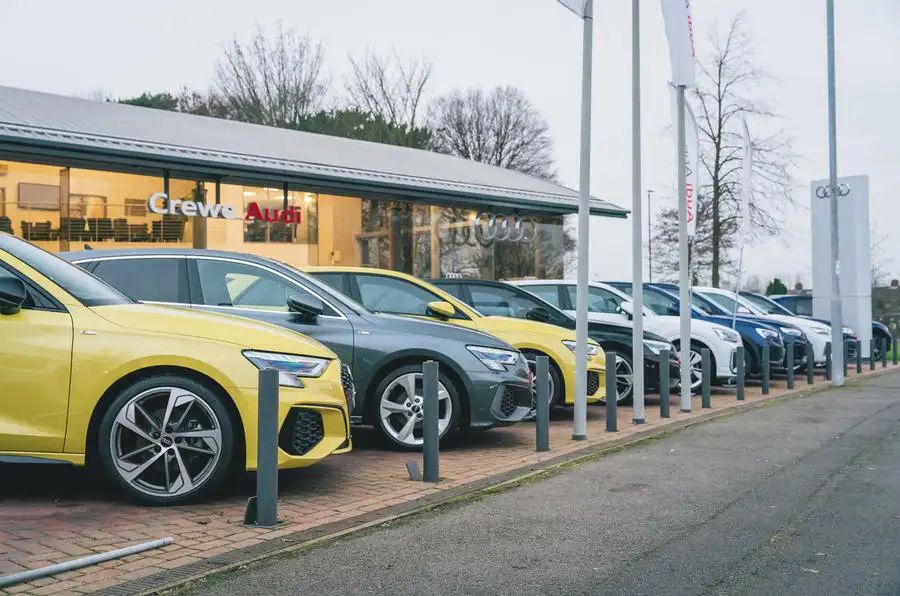
The UK new car market surpassed two million registrations in 2025 for the first time since the pandemic, boosted by rising electric vehicle (EV) sales despite ongoing affordability concerns, according to industry data released Tuesday.
Figures from the Society of Motor Manufacturers & Traders (SMMT) show that total new registrations reached 2.02 million, up 3.5% year-on-year, marking the third consecutive annual increase. December alone saw registrations rise 3.9% to 146,249 vehicles, driven largely by a 16% surge in private buyer demand, while fleet sales dipped slightly and business purchases rose 15%.
Electrified vehicles continued to gain momentum, narrowly missing a majority share for the full year. Battery electric vehicles (BEVs) accounted for 23% of all new registrations, up from 20% in 2024, with 473,348 new BEVs hitting UK roads—more than the combined total of 2021 and 2022—positioning the UK as Europe’s second-largest EV market by volume.
December was a standout month for EVs, with BEVs making up 32% of new registrations, surpassing the government’s 28% zero-emission mandate target for the first time in 2025. Hybrid electric vehicles grew 7.2% to a 14% share, while plug-in hybrids were the fastest-growing category, rising 35% to 11% of the market. Despite the growth of electrified vehicles, internal combustion engine (ICE) vehicles remained the largest segment, accounting for 52% of total registrations.
The SMMT highlighted that manufacturers now offer over 160 BEV models, with at least 60 more expected in 2026, but warned that current EV uptake is still insufficient to meet government policy targets. Industry subsidies for EV sales are estimated at over £5 billion in 2025, roughly £11,000 per vehicle, a level deemed unsustainable long-term.
SMMT Chief Executive Mike Hawes said the market’s recovery past two million registrations was “a reasonably solid result amid tough economic and geopolitical headwinds,” but cautioned that unclear policy signals could harm consumer confidence. “Rising EV uptake is encouraging, but the pace remains slow and costly for industry,” Hawes added. “The government should act urgently to support a sustainable, competitive market that keeps the UK at the forefront of the global auto industry.”