Sri Lanka
 USA
USA Canada
 India
India UK
UK UAE
UAE




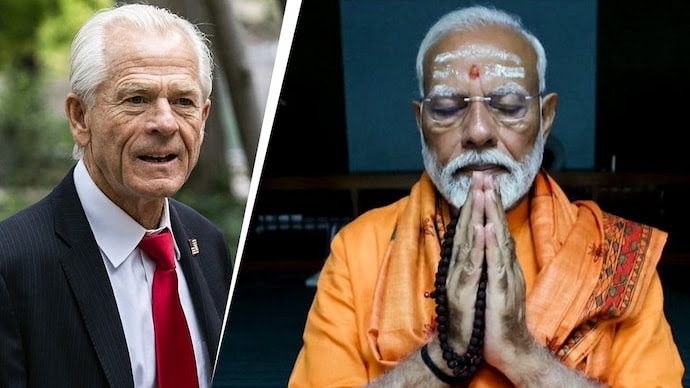
The tariff war between the United States and India has taken a sharp turn, with fresh remarks from Donald Trump’s senior trade adviser, Peter Navarro, suggesting the conflict is not merely about oil or economics but deeply personal.
Navarro posted a photo of Prime Minister Narendra Modi meditating in saffron robes at the Vivekananda Rock Memorial in Kanyakumari — a symbolic image that many saw as a direct swipe at India’s civilisational roots. Analysts say the choice of image and tone suggest Trump’s administration harbors resentment beyond trade disagreements.
According to investment bank Jefferies, the tariffs partly stem from Trump’s frustration at not being given a role in mediating between India and Pakistan. Modi’s rejection of Trump’s claims of brokering peace reportedly soured relations further.
In interviews and on social media, Navarro accused India of:
Becoming an “oil laundromat for Russia” through discounted crude imports.
Acting as a “strategic freeloader” by purchasing Russian arms while seeking U.S. technology transfers.
Engaging in “madness” with its trade and foreign policy decisions.
Yet critics note that U.S. sanctions historically pushed India toward Russian defense deals, while China — not India — remains Moscow’s top crude buyer. Navarro’s rhetoric, they argue, overlooks these realities.
The photo he used of Modi meditating recalls parallels with Swami Vivekananda’s 1893 journey to Chicago, when India’s spiritual wisdom was introduced to the West. By targeting Modi in saffron robes, Navarro risks stereotyping India’s culture to fit a Western media narrative, observers say.
For India, the strategy appears to be measured silence. Analysts suggest Modi’s refusal to directly engage with Trump’s barbs mirrors leaving a WhatsApp message on “read” — a quiet but firm rejection.
As global trade tensions rise, Navarro’s language has exposed that the U.S.–India tariff battle is more than economic policy: it is now personal, symbolic, and wrapped in political image-making.