Sri Lanka
 USA
USA Canada
 India
India UK
UK UAE
UAE




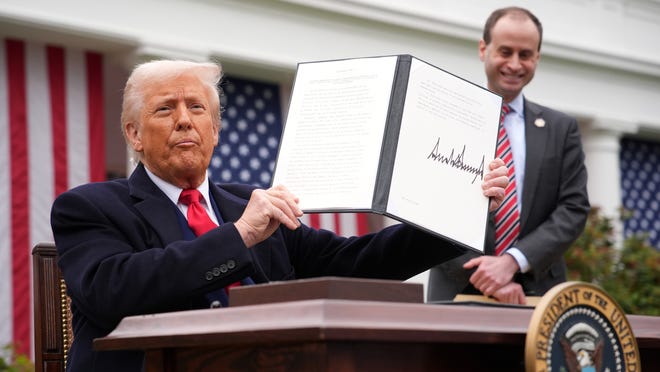
As Donald Trump nears his 100th day of his second term, many Americans say the economic turnaround he promised still feels out of reach. From soaring grocery bills to stock market turbulence and rising debts, life remains tough for millions across the country.
For Traci Dixon, a certified nursing assistant from Independence, Missouri, life has never felt harder. Despite working full-time, she struggles to cover rising rent, fuel her car, and put food on the table. “I thought this year would bring dramatic change for the better,” she said. “But there’s already so much darkness, and it’s only April.”
Across the nation, consumers and businesses alike are feeling the effects of widespread federal job cuts, volatile stock markets, and uncertainty fueled by Trump’s aggressive tariff policies. Leading economists now warn that a recession could be looming.
While Trump has delivered on some campaign promises — major corporations like Apple and Abbott Labs are investing billions into new U.S. factories — the overall economic picture remains shaky. Stock markets have dropped about 9% since Trump took office, eroding retirement savings. Gas prices, though down from their pandemic-era highs, remain above Trump’s $2-a-gallon campaign promise.
Some supporters, like James McMorrow of Cape Cod, have seen personal gains. McMorrow secured a better-paying construction job under Trump’s term, but he admits that the broader immigration crackdown has hurt his community.
Meanwhile, voters like Dixon see little relief. Her gas bills sometimes force her to miss work, and despite inflation easing slightly in March, the cost of living continues to climb while wages stagnate.
Public sentiment is shifting. A recent Pew Research Center survey shows that confidence in Trump’s economic leadership has dropped sharply since last November, with a majority of Americans now expressing little or no confidence in his handling of the economy.
Trump’s heavy reliance on tariffs is contributing to higher consumer costs. Analysts estimate the average U.S. household will pay an extra $3,800 this year because of tariffs, particularly on food and clothing. Household debt has skyrocketed past $18 trillion, while demand for emergency support services like the United Way’s 211 helpline continues to grow.
Personal stories reveal a grim reality: families pulling from credit lines to survive, rising credit card delinquencies, and people like Aaron Washington — a former homeowner now living in transitional housing — fearing that the middle class is becoming an unreachable dream.
Trump has urged Americans to stay hopeful, insisting that economic prosperity is just around the corner. But for many struggling Americans, the wait feels longer — and harder — than ever.