Sri Lanka
 USA
USA Canada
 India
India UK
UK UAE
UAE




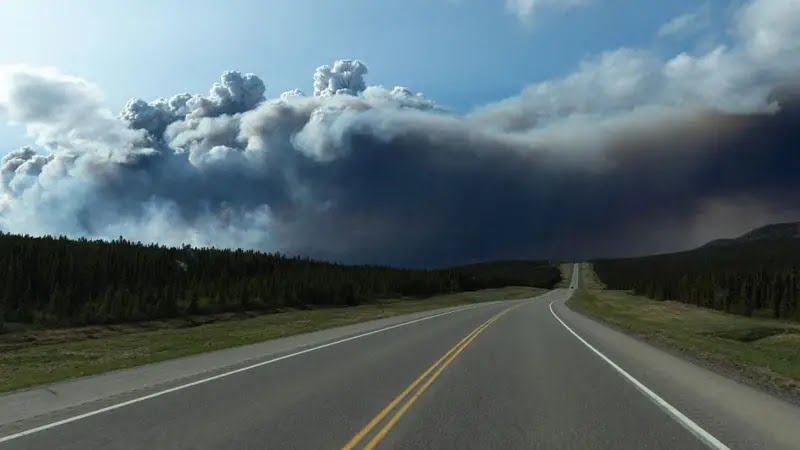
Over 17,000 people have been evacuated from the Canadian province of Manitoba as fast-moving wildfires, fueled by hot and dry conditions, sweep across large parts of the country. Military aircraft and helicopters have been deployed to assist evacuations from remote communities, including the northern First Nations community of Pukatawagan.
Dense smoke from more than 188 active wildfires has blanketed areas of Canada and spread into parts of the United States. Saskatchewan and Manitoba have declared states of emergency for the next month, seeking international assistance to combat the fires.
In Saskatchewan, there are currently 17 wildfires burning, with eight classified as uncontrolled. Premier Scott Moe warned that evacuee numbers could rise from 8,000 to 10,000 in the coming days due to persistent dry weather and extreme fire conditions. Manitoba’s fire report indicates 25 active fires, with 11 considered out of control.
In Flin Flon, a Manitoba city of 5,000, only firefighters and support workers remain as residents evacuate. Prime Minister Mark Carney praised the dedication of evacuation teams, describing the situation as both large-scale and complex.
Meteorologist Danielle Desjardins of Environment and Climate Change Canada highlighted the unfavorable forecast, predicting winds that could further fuel the fires despite a cold front. Smoke from the fires has triggered air quality alerts affecting an estimated 22 million people in the U.S., with northern Minnesota facing “unhealthy for everyone” levels.
Canada’s worst wildfire season on record was in 2023, with over 42 million acres burned. Experts warn that climate change is increasing the frequency and intensity of wildfires, as extreme heat and dry conditions create ideal fire-spreading conditions.