Sri Lanka
 USA
USA Canada
 India
India UK
UK UAE
UAE




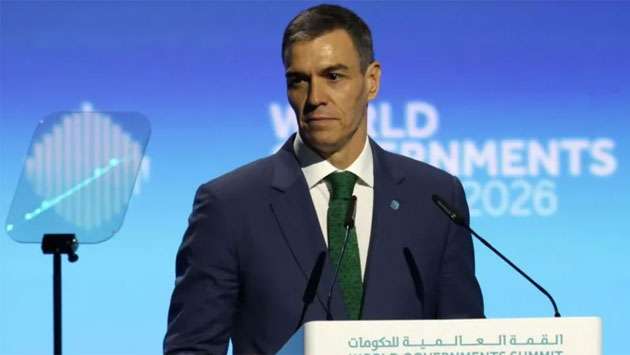
Spain has announced plans to ban children under the age of 16 from using social media, becoming the latest European country to take a strong stance on online safety for minors.
Speaking at the World Governments Summit in Dubai, Spanish Prime Minister Pedro Sánchez said the government would act decisively to protect children from what he described as the “digital Wild West.” The proposed ban, which still requires parliamentary approval, forms part of a broader package of digital reforms aimed at holding technology companies more accountable.
Under the proposed measures, social media platforms would be required to introduce effective age-verification systems, moving beyond simple check-box confirmations. Sánchez emphasised that these systems must create “real barriers that work” to prevent underage access.
The reforms would also make company executives legally responsible for illegal or harmful content on their platforms. In addition, manipulating algorithms to amplify illegal content would be criminalised, and a new system would be introduced to track how digital platforms contribute to social division and the spread of hate.
“Our children are exposed to a space they were never meant to navigate alone,” Sánchez said, describing social media as a landscape of addiction, abuse, manipulation, pornography and violence. “We will no longer accept that. We will protect them.”
The announcement follows similar moves globally. Australia became the first country in the world to introduce a social media ban for under-16s last year, while countries including France, Denmark and Austria are considering similar restrictions. The UK government has also launched a consultation on whether to implement an age-based ban.
However, social media companies have raised concerns, arguing that such bans could be difficult to enforce, ineffective, and potentially isolating for vulnerable teenagers. Reddit is currently challenging Australia’s ban in court.
Spain’s proposal also comes amid growing scrutiny of technology platforms. European authorities are investigating several companies over concerns related to data misuse, harmful content and child protection. Sánchez stated that platforms could no longer hide behind claims of technological neutrality.
While Spain’s main opposition party has expressed support for the ban, political resistance remains, and the government faces challenges in securing parliamentary approval. Despite this, Sánchez said he hopes the legislation can be passed soon.