Sri Lanka
 USA
USA Canada
 India
India UK
UK UAE
UAE




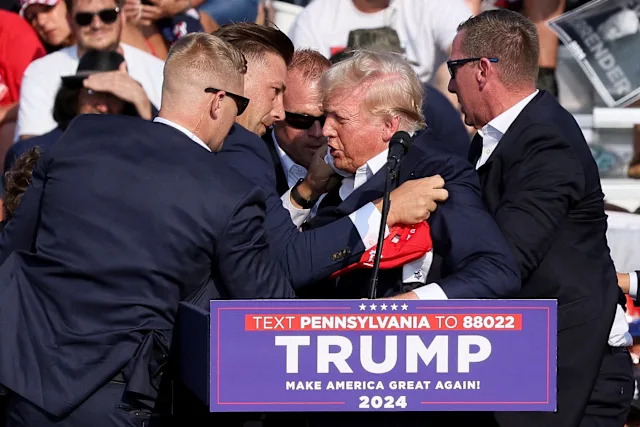
The U.S. Secret Service has suspended six staff members without pay — ranging from 10 days to six weeks — following an internal investigation into the attempted assassination of Donald Trump at a campaign rally last year. The disciplinary action comes amid sweeping changes to agency procedures, communications, and drone surveillance protocols.
One Year After the Attack in Butler, Pennsylvania
On July 13, 2024, former U.S. President and then-presidential candidate Donald Trump was shot in the ear during a rally at the Butler Farm Show in Pennsylvania. A spectator was killed, and the gunman was eventually neutralized by a counter-sniper.
To mark the first anniversary of the event, the Secret Service released a detailed report on July 10, outlining steps taken since the attack to prevent a recurrence.
Key Disciplinary Measures and Reforms
Secret Service Director Sean Curran, who was present during the attack, stated:
“Since President Trump appointed me as director, I have kept my experience on July 13 top of mind. The agency has taken many steps to ensure such an event can never be repeated in the future.”
Of the 46 recommendations made by Congress, the agency reported it has:
Implemented 21,
Begun work on 16, and
Referred 9 to Congress.
What Went Wrong?
One of the most serious communication failures was that federal agents were operating on a different radio system than local law enforcement. As a result, critical witness reports about a potential gunman were delayed in reaching key officials, delaying Trump’s evacuation from the stage.
The report also revealed that the agent assigned to detect drones had trouble operating surveillance equipment and had to call a tech support hotline. By the time the rally began, only local law enforcement drones were visible, leaving a major gap in real-time surveillance.
Structural and Tactical Upgrades Underway
In response, the Secret Service has:
Created a new aviation division to better monitor outdoor event venues,
Improved radio communications and coordination with local authorities,
Boosted outdoor security,
Enhanced drone detection and operator training, and
Requested more equipment and staffing.
The agency is also developing internal drone capabilities after rejecting the idea of relying on Pentagon drone teams, citing the unpredictability of inter-agency availability.
Ongoing Scrutiny
Rep. Mike Kelly, who chaired the congressional task force investigating the attack, praised the transparency of the report:
“It is critical that we return the Secret Service to the gold standard of protection as they modernize their zero-fail mission.”
Despite the progress, Kelly said lawmakers are still seeking full clarity on the breakdowns that enabled the shooter to get so close.