Sri Lanka
 USA
USA Canada
 India
India UK
UK UAE
UAE




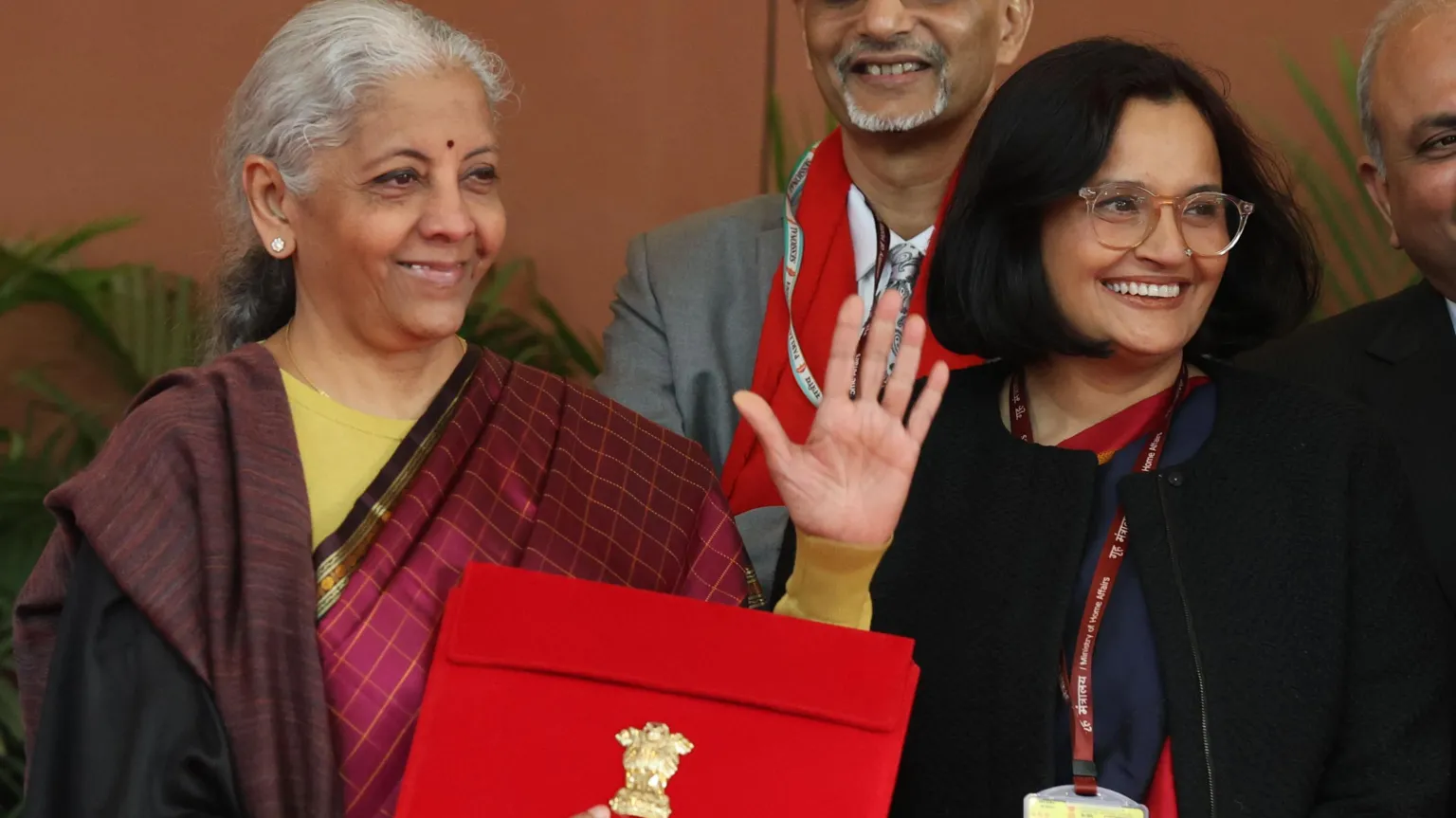
India’s 2026–27 Budget places strong emphasis on infrastructure, strategic manufacturing, and fiscal discipline as global economic and geopolitical tensions intensify.
India’s Finance Minister Nirmala Sitharaman on Sunday presented the Union Budget for 2026–27, outlining higher infrastructure and defence spending while reinforcing fiscal restraint and boosting domestic manufacturing in key strategic sectors.
According to India’s Economic Survey, the country is expected to close the current financial year with a robust GDP growth rate of 7.4%. However, growth is projected to slow slightly next year as new 50% tariffs imposed by the United States on Indian exports begin to weigh on trade performance.
A key feature of the budget is its focus on controlling the fiscal deficit, signalling a shift toward long-term economic stability after extensive tax concessions introduced last year.
Infrastructure and Defence Spending Rise Sharply
Infrastructure development continues to be a cornerstone of the Narendra Modi government’s economic strategy. Allocations for roads, ports, and railways have been increased, with capital expenditure rising by 9% to ₹12.2 trillion for the financial year beginning April 1.
Defence spending has also seen a significant boost of over 20%, reflecting growing global geopolitical tensions and India’s focus on strengthening national security.
Manufacturing Push in Strategic Sectors
The budget prioritises manufacturing in seven strategic sectors, including rare earth minerals, semiconductors, data centres, and textiles, as private investment slows and foreign capital outflows increase.
Dedicated rare earth corridors will be established in Tamil Nadu, Kerala, Andhra Pradesh, and Odisha, following the approval of a ₹73 billion rare earths scheme last year. In addition, a second semiconductor mission with an allocation of $436 million has been launched to support equipment production, materials, and intellectual property design.
To attract global tech investment, the government announced a tax holiday until 2047 for foreign cloud companies investing in data centres in India. This move builds on recent investments, including Google’s $15 billion data centre project in southern India.
New mega-textile parks were also announced to enhance export competitiveness, particularly after the recent India–EU free trade agreement, which is expected to benefit the labour-intensive garment sector.
No Fresh Tax Cuts Announced
While the government increased duty-free input limits for export-focused industries such as seafood and granted customs exemptions for lithium-ion battery manufacturing inputs, no new personal income tax cuts were announced.
This follows last year’s increase in tax exemption thresholds, which made annual incomes of up to ₹1.2 million tax-free, leaving limited fiscal space for further concessions.
Stronger Fiscal Discipline
From April 2026, the government will shift its fiscal focus from annual deficit targets to managing the debt-to-GDP ratio, aiming to reduce it from 56% to around 50% by 2030–31. The fiscal deficit is projected to fall slightly from 4.4% to 4.3% of GDP in the coming year.
Markets React Negatively
Despite positive signals on fiscal discipline, financial markets declined sharply after the government raised the Securities Transaction Tax (STT) on futures and options trading. Market analysts warned that the move could reduce trading volumes and increase costs for investors.