Sri Lanka
 USA
USA Canada
 India
India UK
UK UAE
UAE




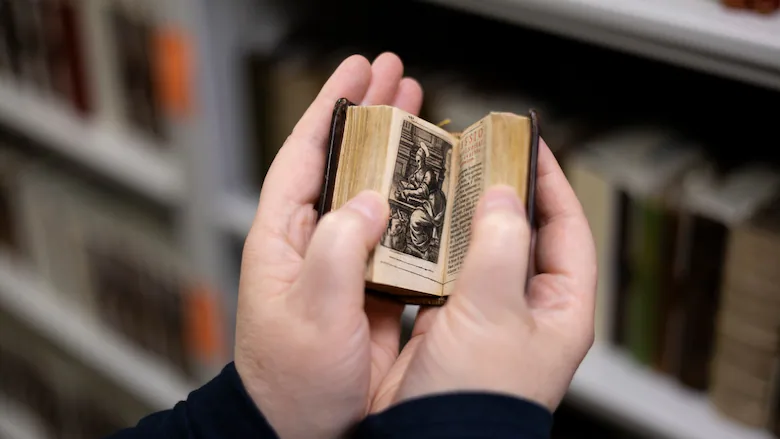
A rare 16th-century Catholic prayer book thought to be lost to history has been uncovered at McMaster University, sparking excitement among scholars and religious historians alike. The rediscovery of the 1596 Officium beatae Mariae virginis—published by the famed Plantin Press—has proven to be a significant addition to global bibliographic records.
A rare and historically significant Catholic prayer book, printed in 1596 by the renowned Plantin Press, has been rediscovered at McMaster University in Ontario. The Officium beatae Mariae virginis—or The Book of Hours of the Virgin Mary—had long been considered a “lost book” by scholars, with financial records indicating its existence but no known surviving copies.
The discovery was made by Ruth-Ellen St. Onge, the distinctive collections cataloguing librarian at McMaster University Libraries. While preparing for an exhibition on Plantin Press, she noticed an entry labeled “lost book” in the Universal Short Title Catalogue. Realizing the significance of the note, she verified the details and found that the book had been part of McMaster’s collection since 1965.
“It’s very exciting for McMaster and for scholars in general,” said St. Onge, emphasizing the rarity of small-format books of hours from the Plantin Press, most of which have not survived. The book, set to be displayed to the public in early May, is written in Latin and features prayers for specific times of day. Such books were often used daily by devout Catholics and religious orders, making their preservation over centuries especially rare.
The prayer book is notable not only for its survival but also for its craftsmanship. It contains 645 pages printed in red and black ink, stands just seven centimeters high, and remains in sturdy condition. Its binding, likely from the 18th century, has protected it well. St. Onge remarked that it fits neatly into the palm of her hand.
Adding to the book’s historical value is the involvement of women in its production. Christophe Plantin’s daughter Martina and his widow Jeanne Rivière contributed to the press’s operations, and Lynken Van Lanckvelt, a female printer, produced the book’s copper-engraved illustrations. Her mother, Mynken Liefrinck, also worked for the Plantin Press, marking a legacy of female craftsmanship in early printing.
The book originally belonged to Aldo Caselli, an Italian professor who immigrated to the U.S. during World War II. He sold his collection of Renaissance-era books, including this one, to McMaster University in 1965. Though catalogued then, its significance was only recently recognized due to newly available bibliographic resources.
The Plantin Press, based in Antwerp, printed nearly 75,000 books between 1589 and 1610. Yet, only 81 copies of these publications survive, with McMaster’s being the only known edition of its kind in size and format featuring copper engravings.
Scholars and church figures have praised the discovery. Monsignor Murray Kroetsch of the Roman Catholic Diocese of Hamilton called it a vital insight into the devotional life of early modern Christians and a meaningful find as the Christian world enters Holy Week. Meanwhile, the Plantin Press Museum in Belgium expressed excitement over the news, with plans underway for further research by St. Onge during her upcoming visit to the museum.
Wade Wyckoff, associate university librarian, highlighted the significance of the ongoing Hidden Special Collections project, which aims to catalogue and reassess McMaster’s vast archival holdings. He noted that rediscovering treasures like this prayer book emphasizes the enduring value of meticulous archival work.
#RareBooks #CatholicPrayerBook #PlantinPress #BookDiscovery #McMasterUniversity #16thCenturyPrinting #HistoricalManuscripts #WomenInPrinting