Sri Lanka
 USA
USA Canada
 India
India UK
UK UAE
UAE




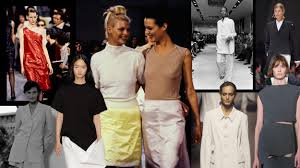
In the Spring 2026 season, designer Simone Bellotti revived Jil Sander’s original vision of minimalism with striking precision. His collection stripped away excess, favoring intentional lines, refined cuts, and disciplined elegance. Each fold and slash of fabric carried purpose, reflecting a philosophy where every detail mattered. Against the extravagant displays of Milan Fashion Week, Bellotti’s work felt almost austere — yet powerful in its restraint.
Modern fashion’s understanding of minimalism, however, has drifted far from its origins. Terms like “quiet luxury” and “clean girl” have diluted the concept into a trend of beige sweaters and predictable denim. As stylist Dione Davis notes, “Minimalism is about reducing to make room for creativity.” What was once an art form has become a formula, copied endlessly across social media feeds.
Designers like Zane Li of Lii and Emily Grey of Grey’s are among those reclaiming minimalism’s true essence. Their works celebrate precision, quality, and thoughtful construction — echoing the innovation of icons like Calvin Klein and Helmut Lang in the 1990s. Back then, minimalism wasn’t about playing safe; it was about making bold statements through subtle design.
Even archival fashion enthusiasts like Nicole Rice of Simplicity City remind us that real minimalism lies in confidence and authenticity — the ability to let the garment, and the person, simply be.
In an era of overstimulation and visual noise, embracing true minimalism is not about looking rich or trendy; it’s about having the courage to stand still, to choose less — and in doing so, say more.