Sri Lanka
 USA
USA Canada
 India
India UK
UK UAE
UAE




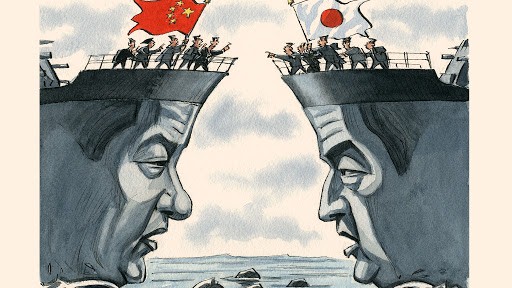
Japan and China are facing their most serious diplomatic rift in more than a decade, following an unplanned statement by Prime Minister Sanae Takaichi that has triggered sharp economic retaliation and escalating political tension.
Japan is preparing for an extended diplomatic freeze with China after an unscripted comment by Prime Minister Sanae Takaichi sparked outrage in Beijing, leading to swift economic measures and a significant deterioration in bilateral relations.
The controversy began when Takaichi, during her first parliamentary question session, suggested that a Chinese attack on Taiwan could prompt a Japanese military response. The remark departed from Japan’s long-maintained policy of strategic ambiguity, triggering an immediate and angry response from China, which considers Taiwan a part of its territory.
Japanese government officials later confirmed that the comment was neither coordinated nor intended as a policy shift. One official noted that the statement was “not incorrect,” but admitted that Tokyo now has little ability to retract or soften its impact.
China Responds with Economic Pressure
Beijing rapidly announced measures targeting Japan’s economy, including a halt on Japanese seafood imports, cancellations of cultural exchanges, and a ban on group travel to Japan — a move expected to drain billions from Japan’s tourism industry. Several official dialogues were also suspended.
Economists warn that the consequences could be substantial. Nomura Research Institute’s Takahide Kiuchi estimates the tourism ban alone could cost Japan more than $14 billion annually. A broader consumer boycott in China could reduce Japanese company sales by up to 1% of Japan’s GDP.
Tokyo is especially concerned about potential restrictions on rare earth exports, vital to Japan’s electronics and automotive industries. China still supplies 60% of Japan’s rare earth imports despite previous diversification efforts.
Symbolic Diplomacy and Rising Tensions
Efforts by Tokyo to ease tensions have been met with pointed gestures from Beijing. Senior-level talks in China were described as “solemn,” and Chinese diplomat Liu Jinsong appeared in a symbolic five-button collarless suit linked to the 1919 May Fourth Movement — a historical reminder of anti-Japanese resistance.
Beijing has also ruled out a meeting between Takaichi and Chinese Premier Li Qiang at the G20 summit in South Africa. Analysts believe the diplomatic freeze could persist throughout Takaichi’s time in office, with no clear path to reconciliation.
Domestic Reaction and Regional Concerns
Despite the diplomatic fallout, Takaichi continues to enjoy strong support at home, where many view her comment as a firm stance on regional security. Her office maintains that Japan’s policy on Taiwan remains unchanged and that dialogue with China remains a priority.
In contrast, Chinese rhetoric has become increasingly hostile. A deleted post by a Chinese diplomat appeared to reference Takaichi’s beheading, while nationalist commentators labelled her an “evil witch.” China’s military even shared a cartoon showing her burning Japan’s pacifist constitution.
With neither side showing signs of compromise, analysts warn of a prolonged stalemate. A Japanese official noted that “there is not even a starting point for improvement,” while a senior U.S. diplomat said a resolution may only come if Beijing seeks to improve ties with Washington using Japan as a diplomatic channel. Until then, observers anticipate a “long winter” in Japan–China relations.