Sri Lanka
 USA
USA Canada
 India
India UK
UK UAE
UAE




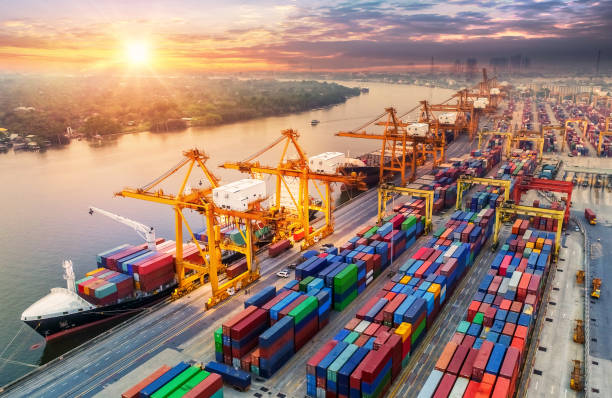
India’s foreign trade story is no longer just about ships, containers, and physical goods. A quiet revolution has taken place over the years—one that doesn’t involve crates of textiles or tonnes of steel, but rather, lines of code, professional advice, and overseas money transfers. These “invisible exports” now bring in more foreign exchange than India’s visible goods exports, and they’ve proven to be far more resilient to global shocks.
According to the 2024-25 figures, India’s gross invisible receipts—which include services exports and private remittance transfers—stood at a record $576.5 billion, compared to $441.8 billion in merchandise exports. That’s a $135 billion lead by invisible earnings, a remarkable reversal from 2013-14, when goods exports were ahead by $85 billion.
📊 A Closer Look: What Are These “Invisible” Exports?
1. Services Exports
Services account for the lion’s share of these earnings:
🔹 $387.5 billion in 2024-25 (up from just $26.9 billion in 2003-04)
🔹 Includes:
• Software services ($180.6 billion)
• Business, financial, and communication services ($118 billion)
• Professional services from IT engineers, accountants, consultants, and data storage firms
2. Private Remittances
Money sent home by Indians working overseas reached $135.4 billion, making it the second-largest contributor to invisible income.
These sources have grown steadily, independent of trade wars, tariffs, or geopolitical tensions, and without major government support like production incentives or new trade deals.
📉 Contrast with Goods Exports
India’s merchandise exports have remained largely stagnant:
🔹 2022-23: $456.1 billion
🔹 2023-24: $441.4 billion
🔹 2024-25: $441.8 billion
Meanwhile, imports continue to surge, hitting $729 billion in 2024-25, widening the trade deficit to $287.2 billion. But the net surplus from invisibles—which hit $263.8 billion—has significantly cushioned the blow, keeping India’s current account deficit at a relatively stable $23.4 billion, lower than the $32.3 billion from a decade ago.
🇨🇳 China vs. 🇮🇳 India: A Tale of Two Trade Models
🔹 China is the “factory of the world” with a $768 billion merchandise trade surplus, but it has a $344.1 billion deficit in invisible trade, mostly due to higher imports of services.
🔹 India, meanwhile, is becoming the “office of the world”, boasting a $188.8 billion services trade surplus and strong remittance inflows.
This shift redefines how India’s economy engages with the global market, not through massive manufacturing outputs, but through the intellectual and professional strength of its people.
⚖️ Policy Outlook: Trade Talks Ignore Invisible Giants
Current India–US trade talks are still focused on textiles, steel, and agriculture, while services exports and foreign worker visas remain off the table. Yet, it is this invisible sector that’s quietly driving the country’s external earnings and keeping its trade balance afloat.