Sri Lanka
 USA
USA Canada
 India
India UK
UK UAE
UAE




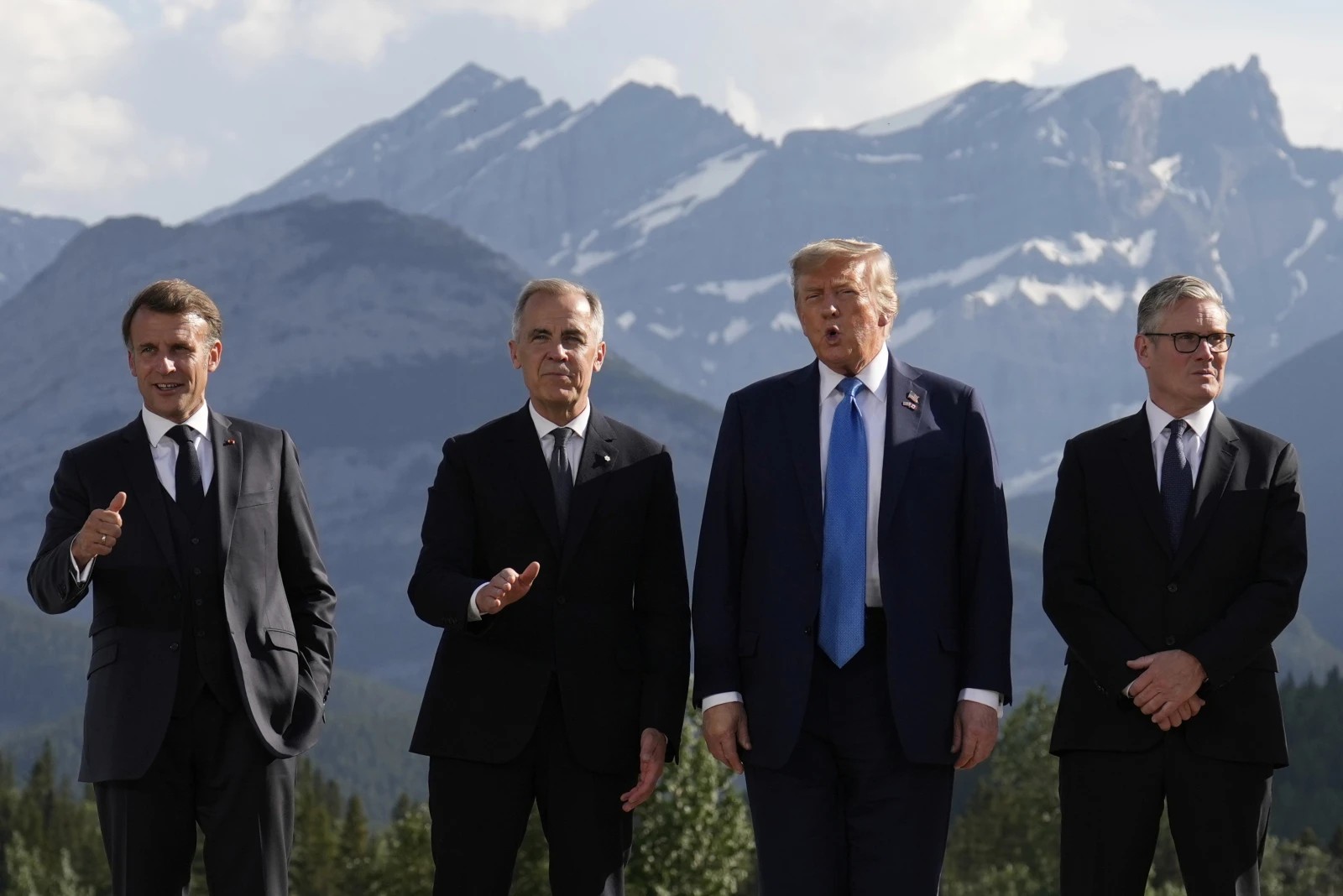
Six G7 leaders wrapped up a tense summit this week, struggling to present unity amid escalating global crises and the early departure of U.S. President Donald Trump.
Held in Kananaskis, Canada, the summit brought together leaders from Canada, the U.K., France, Germany, Italy, Japan, and guest attendees Ukrainian President Volodymyr Zelenskyy and NATO’s Mark Rutte. Discussions focused on Russia’s war in Ukraine and the worsening Israel-Iran conflict—but consensus remained elusive.
Zelenskyy urged allies for stronger support, calling for an unconditional ceasefire and peace negotiations. Yet, the summit concluded without a joint statement on Ukraine—largely due to U.S. hesitation, which Canadian officials later denied was planned.
Meanwhile, Israel’s aerial assault on Iran and Tehran’s retaliatory missile strikes overshadowed the event. French President Emmanuel Macron cautioned against any push for regime change in Iran, warning of greater regional instability.
Trump, who left before the final sessions, said his return to Washington was due to the “extraordinary” Middle East situation, not disagreements at the summit. However, his absence intensified focus on his diverging stance: he opposed new sanctions on Russia and blamed the G7’s expulsion of Putin in 2014 for the current war in Ukraine.
Despite the lack of unity, the leaders did agree to curb harmful AI impacts and push back against unfair global trade practices, especially regarding access to critical minerals.
In a rare bright moment, Trump and U.K. Prime Minister Keir Starmer formalized a previously announced trade deal—though the scene turned awkward when Trump dropped the papers and Starmer scrambled to pick them up, mindful of tight U.S. security rules.
As tensions simmered, Italian PM Meloni’s viral eye-roll at Macron and Trump’s tariff threats added to the diplomatic discomfort. With war, trade disputes, and power struggles brewing, the summit closed with more questions than answers.