Sri Lanka
 USA
USA Canada
 India
India UK
UK UAE
UAE




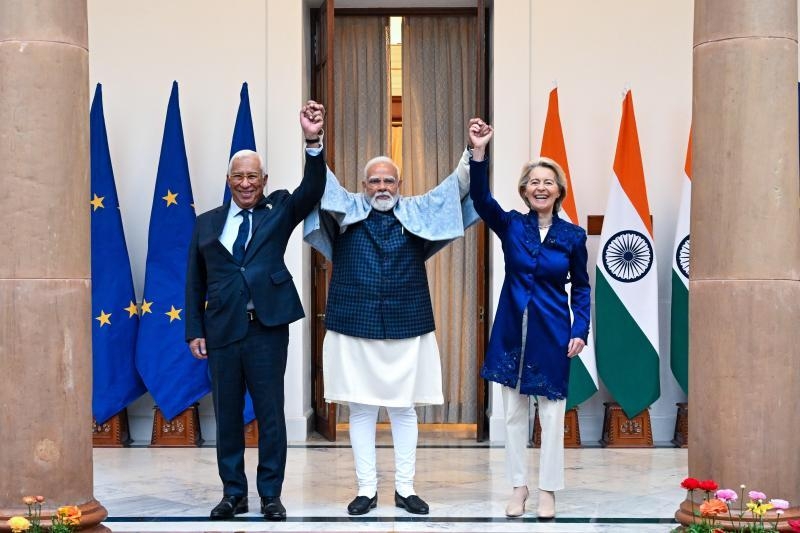
The European Union and India have successfully concluded negotiations on a landmark Free Trade Agreement (FTA), marking the largest and most ambitious trade deal ever signed by either side. The agreement significantly strengthens economic and political ties between the world’s second- and fourth-largest economies, at a time of growing global uncertainty and geopolitical tension.
European Commission President Ursula von der Leyen described the agreement as a historic milestone, stating that it creates a free trade zone covering nearly 2 billion people. She said the deal sends a powerful global message that rules-based cooperation and economic openness continue to deliver meaningful results, adding that this agreement is only the beginning of a deeper EU–India partnership.
Currently, trade in goods and services between the EU and India exceeds €180 billion annually, supporting nearly 800,000 jobs across the EU. The new agreement is expected to double EU goods exports to India by 2032, as tariffs will be eliminated or reduced on 96.6% of EU exports, resulting in annual savings of around €4 billion in duties for European businesses.
This agreement represents the most extensive trade opening India has ever offered to a partner. It provides EU companies with a major competitive advantage and enhanced access to the world’s most populous country, home to 1.45 billion people and one of the fastest-growing major economies with a GDP of €3.4 trillion.
Boost for Businesses and SMEs
India will grant the EU tariff reductions unmatched by any of its other trade partners. Import duties on cars will gradually fall from 110% to as low as 10%, while tariffs on car parts will be fully eliminated within five to ten years. Significant tariff cuts will also apply to machinery, chemicals, and pharmaceutical products.
A dedicated chapter in the agreement focuses on small and medium-sized enterprises (SMEs), ensuring access to information, transparency, and support mechanisms to help smaller businesses benefit from new export opportunities.
Major Gains for Agriculture and Food Exports
The FTA reduces or removes high tariffs on EU agri-food exports, which currently average over 36%. Tariffs on wine will be reduced from 150% to as low as 20%, olive oil tariffs will be eliminated over five years, and duties on processed food products such as bread and confectionery will be removed.
Sensitive EU agricultural sectors, including beef, poultry, rice, and sugar, remain fully protected, while all Indian imports must continue to meet strict EU food safety and health standards.
Services, Intellectual Property, and Sustainability
The agreement provides EU firms with privileged access to India’s services sector, including financial services and maritime transport, marking India’s most ambitious commitments in this area to date. It also introduces strong protections for intellectual property rights, benefiting innovation-driven industries in both regions.
A dedicated sustainability chapter addresses climate change, environmental protection, workers’ rights, and women’s empowerment. The EU and India will also establish a joint climate cooperation platform in early 2026, supported by a proposed €500 million EU funding package to help India reduce emissions and promote sustainable industrial growth.
What Comes Next
The negotiated texts will soon be published and undergo legal review and translation. Following approval by the EU Council and the European Parliament, and ratification by India, the agreement will formally enter into force.