Sri Lanka
 USA
USA Canada
 India
India UK
UK UAE
UAE




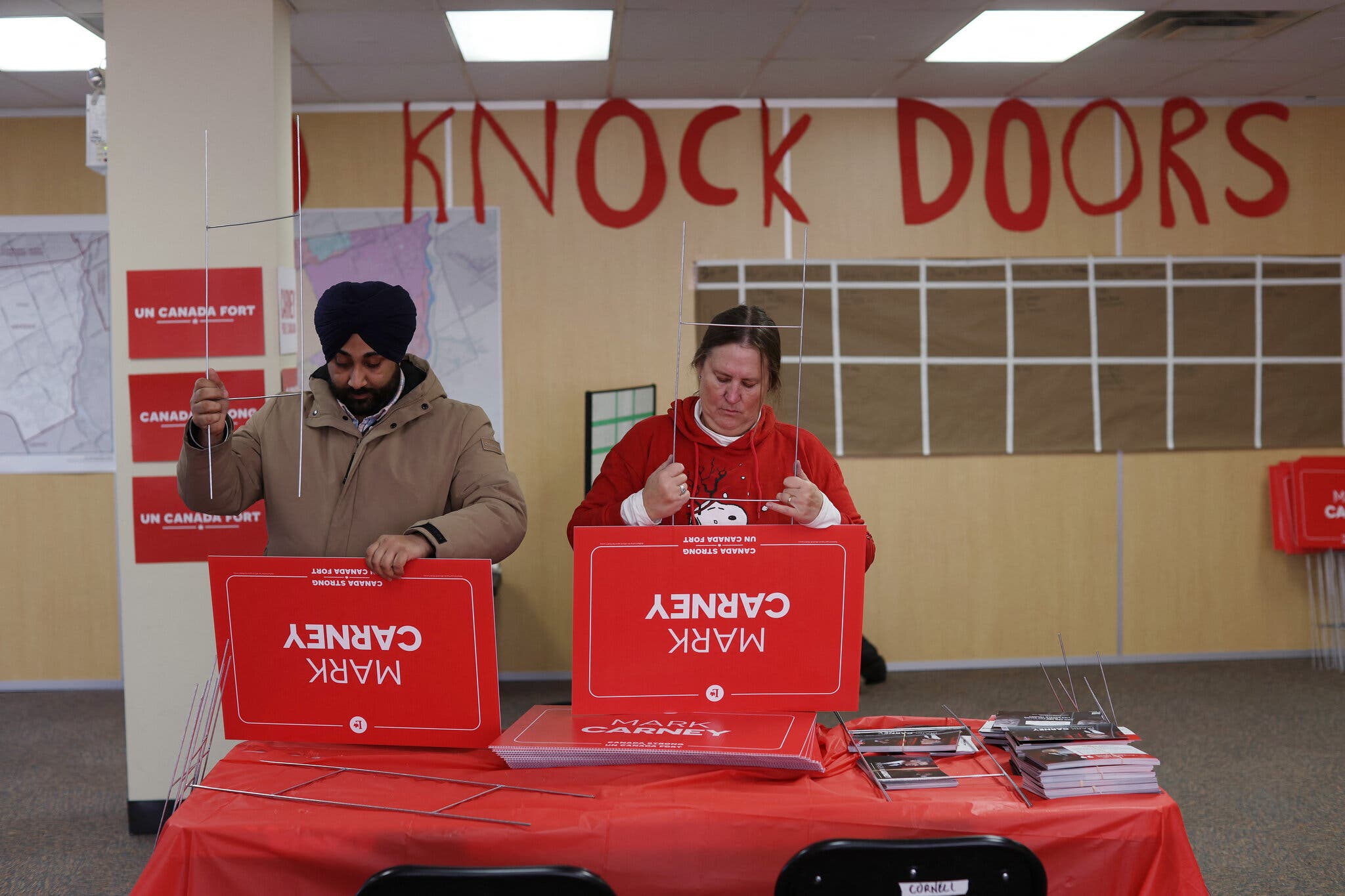
As Canadians prepare to cast their votes on April 28, understanding the unique features of the country’s electoral system is essential—from paper ballots and hand counting to how a prime minister is chosen.
Canada’s 2025 federal election is set for April 28, with voters poised to decide whether the Liberal Party, now led by Prime Minister Mark Carney, retains power, or whether the Conservatives under Pierre Poilievre will reclaim government after nearly a decade in opposition.
Who Votes and What’s on the Ballot?
All Canadian citizens are eligible to vote, including those living abroad and prisoners. The only exception is the chief electoral officer, who, by law, cannot vote during their 10-year term. The governor general also abstains from voting to maintain the neutrality of the monarchy’s representative.
Canadians will elect 343 members to the House of Commons—five more than in the last election, reflecting population growth. Each voter selects one local representative using the “first past the post” system, where the candidate with the most votes wins, even without a majority.
There are no referendums or other offices on the ballot.
How Do Canadians Vote?
Voters typically receive a voter card by mail outlining polling locations and early voting options, though it’s not mandatory to bring this card. Elections Canada also offers online services to assist voters with incorrect or missing information.
Canadians unable to vote in person—such as those living abroad—must apply for a mail-in ballot by Tuesday prior to the election. These ballots must arrive at Elections Canada headquarters in Ottawa by 6 p.m. Eastern on April 28 to be counted.
Who Chooses the Prime Minister?
Canadians do not directly vote for the prime minister. The leader of the party with the most seats—either a majority or a workable plurality—will be invited by the governor general to form the government. That leader then becomes prime minister and appoints cabinet members, usually from their own party.
This election is particularly significant for Prime Minister Mark Carney, who became Liberal leader just last month following Justin Trudeau’s departure. He is contesting his first seat in a middle-class Ottawa suburb.
How Are Results Counted?
Canada is known for its traditional, low-tech approach to elections. Ballots are paper-based and hand-counted at polling stations by Elections Canada staff, without the use of machines. Candidates may appoint observers to monitor the count.
With polls closing at staggered times across six time zones—mostly around 9:30 p.m. Eastern—the first results are expected shortly after that. Most results will be available on election night, though special ballots (for military, overseas voters, and prisoners) are counted afterward to avoid double voting.
What Happens if No Party Wins a Majority?
Minority governments are common in Canada. If no party wins a majority of seats, the one with the most often forms a government, relying on informal support from other parties to pass legislation. However, these governments remain vulnerable to defeat by confidence votes or failed budget bills.
Coalition governments are rare in Canadian history, with the last occurring during World War I. In recent times, the NDP supported the Trudeau-led Liberals after the 2021 election but did not formally join the government.
As April 28 approaches, voters are not only choosing representatives—they are also shaping the direction of Canada’s political landscape for the years ahead.