Sri Lanka
 USA
USA Canada
 India
India UK
UK UAE
UAE




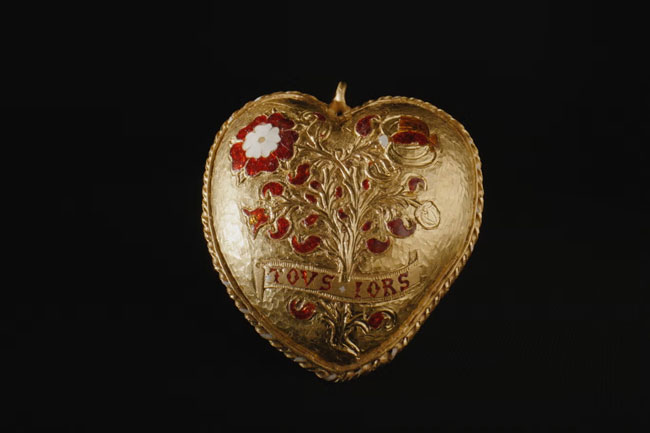
The British Museum has successfully concluded a four-month fundraising campaign, securing £3.5 million to acquire a rare gold pendant with significant ties to Henry VIII and his first wife, Katherine of Aragon.
The artefact, known as the Tudor Heart, was discovered by a metal detectorist in 2019 and is considered crucial due to the scarcity of items directly linked to the royal couple’s marriage.
The London institution announced it had reached its ambitious target following a concerted appeal launched last October.
Contributions included £360,000 in public donations from more than 45,000 individuals, alongside substantial grants from trusts and arts organisations.
A significant boost came from The National Heritage Memorial Fund, which provided £1.75 million, while The Julia Rausing Trust had already pledged £500,000 before the public campaign began.
Further support was received from the Art Fund, donating £400,000, and The American Friends of the British Museum, contributing £300,000.
Nicholas Cullinan, director of the British Museum, expressed his gratitude, stating: “I want to say a heartfelt thank you to everyone who supported our campaign and to the National Heritage Memorial Fund for so generously awarding £1.75 million.
The success of the campaign shows the power of history to spark the imagination and why objects like the Tudor Heart should be in a museum.
This beautiful survivor tells us about a piece of English history few of us knew, but in which we can all now share. I am looking forward to saying more soon on our plans for it to tour the UK in the future.”
The 24-carat gold pendant is believed to have been commissioned for a tournament in October 1518, celebrating the betrothal of their daughter, Princess Mary, to the French heir apparent.
Historical research by the museum indicates that Henry VIII frequently commissioned London goldsmiths to create elaborate costume jewellery for grand celebrations and state occasions, intended to convey an impression of opulence at court.
The intricate design of the pendant unites the Tudor rose with Katherine’s personal symbol, the pomegranate, and features a banner inscribed with “tousiors”, an Old French word meaning “always”.
Discovered in a Warwickshire field, the pendant was reported under the Treasure Act 1996, a legal framework that allows museums and galleries in England the opportunity to acquire and display historically significant objects. Simon Thurley, chairman of the National Heritage Memorial Fund, commented: “The Tudor Heart is an extraordinary insight into the culture of Henry VIII’s court, and I am delighted that Memorial Fund support will enable it to go on public display, where people can enjoy it and learn what it tells us about this fascinating period in our history.”
Jenny Waldman, director of the Art Fund, added: “This remarkable object, so rich in history and meaning, can now inspire wonder for generations to come thanks to the collective efforts of so many who believe in the importance of keeping our shared heritage accessible to all.”
The Tudor Heart has been on display in the museum’s gallery two since the fundraising efforts were announced and is set to remain there. The British Museum anticipates formally adding the pendant to its permanent collection later this year.
Source: Independent