Sri Lanka
 USA
USA Canada
 India
India UK
UK UAE
UAE




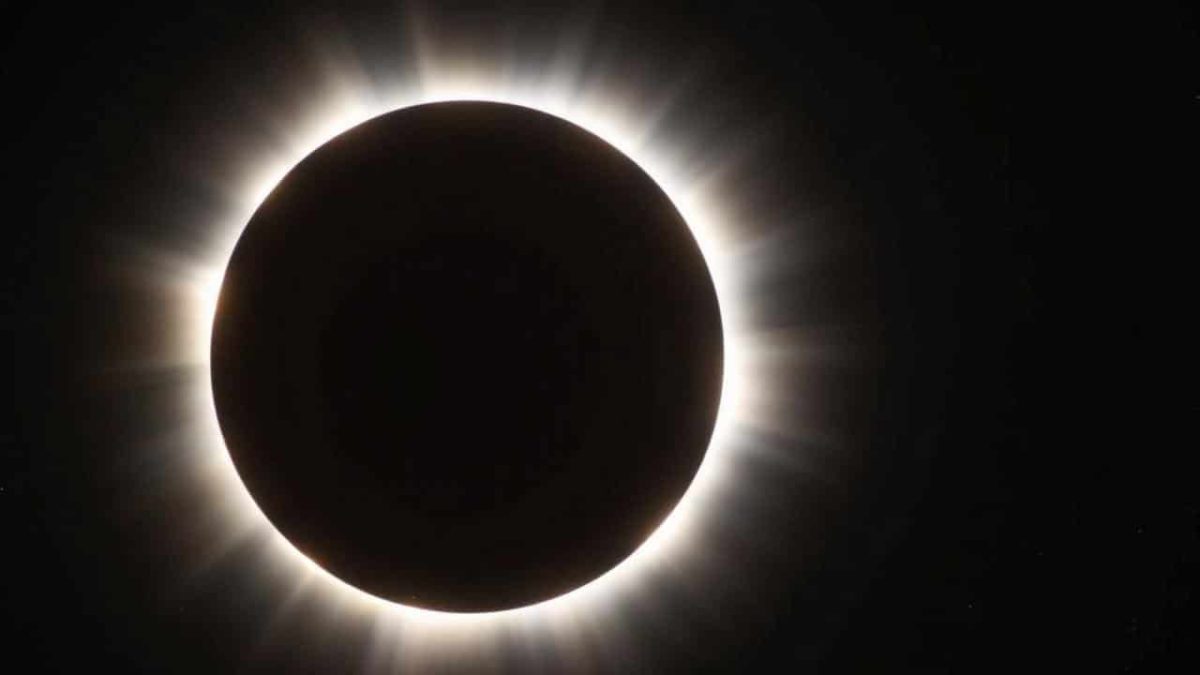
The first sign is the silence.
Birds stop mid-song. The air cools. Daylight drains into an eerie metallic blue, as though the world has slipped into the wrong hour. For a few unforgettable minutes, the sky behaves in a way our brains are not built to expect.
On August 2, 2027, astronomers confirm that Earth will witness the longest total solar eclipse of the 21st century—a rare celestial event that will plunge parts of three continents into midday darkness.
A Once-in-a-Century Alignment
This extraordinary eclipse will occur when the Moon passes directly between the Earth and the Sun, completely blocking the Sun’s disk. What makes this eclipse exceptional is its duration. Along the centerline of the Moon’s shadow, totality will last over six minutes, with estimates reaching up to 6 minutes and 23 seconds—an eternity in eclipse terms.
The extended duration is the result of precise cosmic geometry. The Moon will be near its closest point to Earth, appearing slightly larger in the sky, while the Earth will be near its farthest point from the Sun, making the Sun appear marginally smaller. This rare alignment allows the Moon to cover the Sun for longer than usual.
Astronomers have confirmed through orbital models and satellite data that this will be the longest fully observable total solar eclipse of the century.
Where the Eclipse Will Be Visible
The path of totality will begin over the Atlantic Ocean, move across southern Spain, then sweep through North Africa—including Morocco, Algeria, and Egypt—before crossing the Red Sea and continuing through Saudi Arabia and Yemen.
Egypt is expected to offer the most dramatic views. Cities near Luxor and Aswan sit almost perfectly on the eclipse’s centerline, providing some of the longest durations of totality under typically clear summer skies. The Moon’s shadow passing over the Nile and ancient temples has already captured the imagination of astronomers and travelers worldwide.
Southern Spain will also experience totality, though with the Sun lower in the sky—ideal for photographers hoping to frame historic landmarks against a darkened horizon. Parts of Saudi Arabia will enjoy deep totality as well, particularly inland regions near the Red Sea.
Outside this narrow corridor, much of Europe, Africa, and western Asia will see a partial eclipse, while North America and most of South America will miss totality altogether.
Why Planning Matters
A total solar eclipse is unforgivingly precise. Step just a few hundred kilometers outside the path of totality, and the magic disappears.
Astronomers recommend planning early and staying flexible. Weather conditions, especially in early August, can make or break the experience. Eclipse chasers often choose multiple backup locations within driving distance and monitor forecasts closely in the final days.
Certified eclipse glasses are essential for safe viewing, except during the brief moments of full totality. Simple equipment and the naked eye—protected properly—are more than enough to experience the event in all its emotional power.
As eclipse researcher Dr. Lina Barakat notes, “A total solar eclipse isn’t just a visual phenomenon. For a few minutes, your brain is processing a sky it has never seen before. People cry. People go silent. It’s deeply human.”
More Than a Sky Event
Long after the Moon moves on and daylight returns, people remember eclipses as dividing lines in their lives—before and after. For six minutes, the universe feels intimate. Time slows. Perspective shifts.
The 2027 eclipse promises exactly that kind of moment—one shaped by ancient landscapes, rare celestial timing, and the quiet reminder that we live on a moving planet beneath a living sky.