Sri Lanka
 USA
USA Canada
 India
India UK
UK UAE
UAE




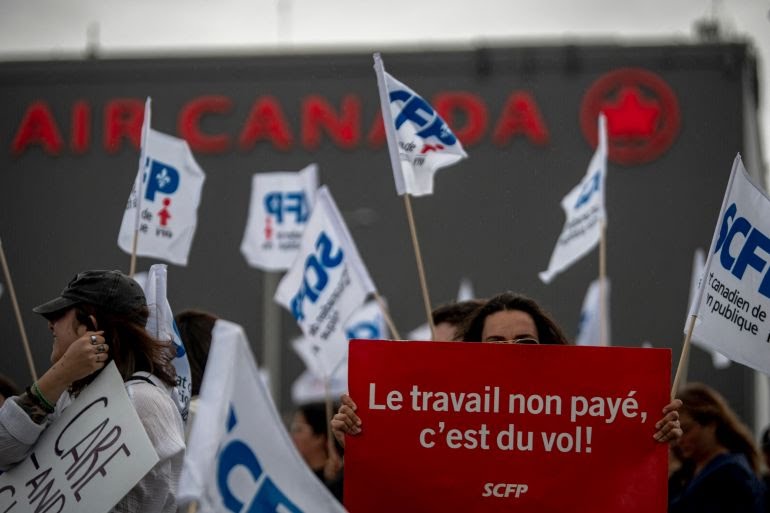
Air Canada flight attendants have vowed to continue their strike, rejecting a government-backed order to return to work in what has become the airline’s first strike in nearly 40 years.
The Canadian Union of Public Employees (CUPE) announced on Sunday that its members would stay off the job, calling the Canada Industrial Relations Board’s (CIRB) back-to-work order “unconstitutional.” The union urged Air Canada to return to the table to negotiate a “fair deal.”
The strike, which began on Saturday, has already disrupted travel for more than 130,000 passengers daily during the peak summer season. Air Canada has said flights will gradually resume starting Monday evening, but the situation remains uncertain.
The Canadian government, citing economic concerns, invoked the Canada Labour Code to push for binding arbitration through the CIRB, a move supported by Air Canada but fiercely opposed by the union. It is highly unusual for a union to openly defy such an order, leaving questions about what measures the government might take next.
Union leaders say the dispute centers on key compensation issues, including demands for pay during ground duties such as passenger boarding and layovers. Currently, flight attendants are largely paid only when the aircraft is in motion. Workers have also rejected proposed wage increases, saying they fall short of keeping pace with inflation and do not match federal minimum wage standards.
On Sunday, solidarity grew as other unions joined the flight attendants’ picket line in Toronto, underscoring wider concerns over labor rights.