Sri Lanka
 USA
USA Canada
 India
India UK
UK UAE
UAE




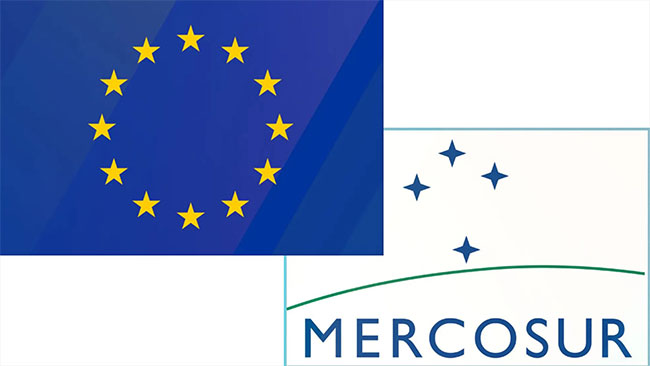
The European Union on Friday reached a free trade agreement with South American countries, 25 years after talks began, despite opposition from farmers in several European countries.
The deal is with the Mercosur trading bloc, which includes Brazil, Argentina, Paraguay and Uruguay.
The deal would now require the approval of the European Parliament within the next few months. After the approval, Brazilian President Luiz Inacio Lula da Silva hailed the move, calling it a “historic day for multilateralism”.
The approval from the EU came after the South American countries put the final touches to the deal in Brussels.
Interestingly, the deal is also reaching its final stage against the backdrop of US President Donald Trump’s tariffs on countries around the world and his recent military intervention in Venezuela.
Meanwhile, the EU also heralded what will be its largest free trade accord to date as a “win-win”, although critics have argued that cheap imports may undercut European farmers in products including beef, poultry and sugar.
“In an international scenario of growing protectionism and unilateralism, the agreement is a signal in favour of international trade as a driver of economic growth, with benefits for both blocs,” Lula posted on X, formerly known as Twitter.
The contested deal
After the announcement, EU Commission President Ursula von der Leyen said the deal will “bring meaningful benefits to consumers and businesses, on both sides”. The deal is coming at a time when Farmers in several countries in Europe held last-ditch protests against the deal, with marches and demonstrations using tractors in France and Belgium.
“There is a lot of pain,” Judy Peeters, a representative for a Belgian young farmers’ group, told AFP at a protest on a motorway south of Brussels.
“There is a lot of anger.” In light of this, Von der Leyen has maintained that she had listened to the concerns of farmers and had acted on them, including by introducing “robust safeguards” to protect their livelihoods in the agreement.
The EU Commission argued that the deal would help fight climate change through commitments to halt deforestation and ensure a “reliable” flow of raw materials, critical for the global green transition. The commission also expects the deal to save local companies €4bn ($4.7bn, £3.5bn) a year in export duties.
Source: Firstpost
–Agencies