Sri Lanka
 USA
USA Canada
 India
India UK
UK UAE
UAE




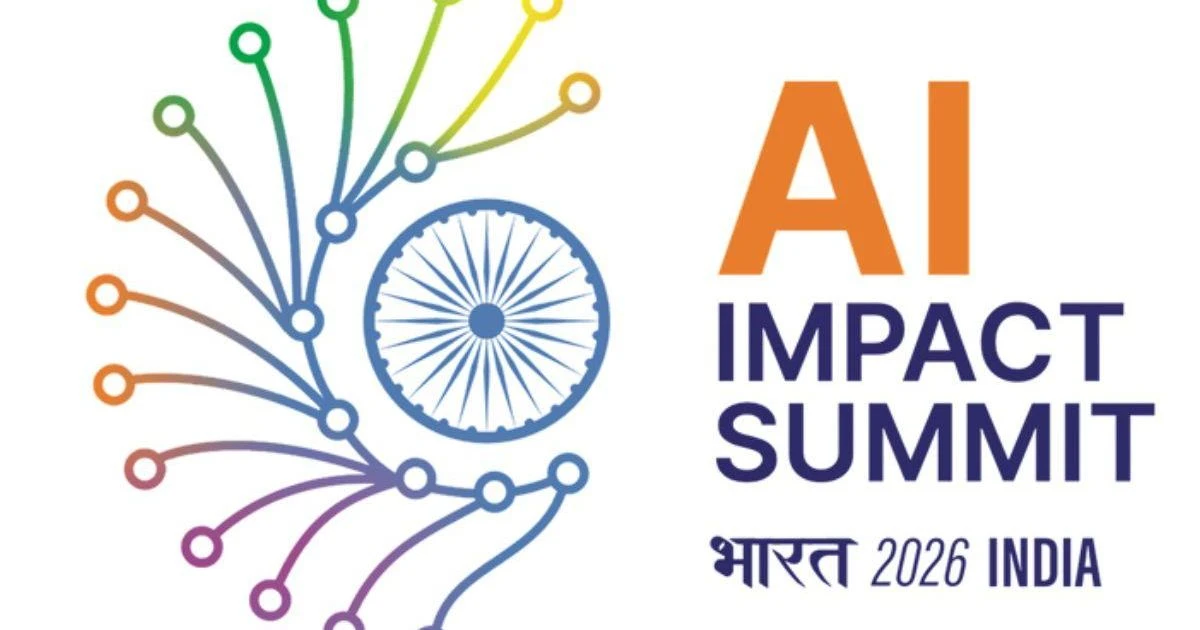
A major international artificial intelligence summit has begun in New Delhi on Monday, drawing world leaders, technology executives, and policymakers to discuss pressing issues ranging from employment disruption to online child safety. However, some observers caution that the event’s broad scope could dilute concrete commitments from participating nations.
The rapid expansion of generative AI has fueled unprecedented profits and soaring valuations for tech companies, but it has also heightened concerns about societal and environmental risks.
The five-day AI Impact Summit, inaugurated by Narendra Modi Monday afternoon, seeks to establish a “shared roadmap for global AI governance and collaboration.” This marks the fourth annual gathering dedicated to AI’s challenges and opportunities, following prior meetings in Paris, Seoul, and the United Kingdom’s Bletchley Park.
Expected to be the largest edition yet, the Indian government anticipates over 250,000 participants, including 20 national leaders and 45 ministerial-level delegations. Tech industry heavyweights such as Sam Altman and Sundar Pichai are also attending, though Jensen Huang of Nvidia will not appear due to unforeseen circumstances.
During the summit, Modi is set to meet leaders including Emmanuel Macron and Luiz Inacio Lula da Silva to discuss strengthening global partnerships and affirming India’s role in the AI sector over the coming decade.
Despite the high-profile gathering, experts remain skeptical about the likelihood of binding measures to hold AI companies accountable. Amba Kak, co-executive director of the AI Now Institute and a former advisor to the US Federal Trade Commission, told AFP that prior industry pledges have largely been limited self-regulation initiatives, allowing companies to “grade their own homework.”
AI Safety and Social Responsibility
Safety remains a core topic, including the dangers of misinformation and deepfakes. Incidents such as the global criticism of Elon Musk’s Grok AI—capable of generating sexualized images of real people, including minors—highlight the urgency of protective measures. According to Kelly Forbes, director of the AI Asia Pacific Institute, safeguarding children and addressing digital harms are rising priorities, though regulatory progress may lag behind technological advancement.
Previous AI summits have evolved from the AI Safety Summit in Bletchley (2023) to the AI Action Summit in Paris (2025), where dozens of countries signed a statement advocating for responsible and ethical AI practices. Notably, the United States did not sign, citing concerns that excessive regulation could stifle innovation.
This year, the Delhi summit emphasizes three guiding principles, dubbed “sutras”: people, progress, planet. Organizers highlight that this is the first AI summit hosted by a developing country, aiming to craft a vision for AI that benefits the many, not just a select few.
India has rapidly ascended the global AI competitiveness ranking, reaching third place in 2025, ahead of South Korea and Japan, according to Stanford University research. Still, experts note that the country has more ground to cover to rival leaders like the United States and China. Neither Donald Trump nor Xi Jinping will attend, though both nations are represented by senior tech policy officials.
Seth Hays, author of the Asia AI Policy Monitor, suggested that discussions will likely focus on balancing regulatory guardrails with continued AI development, alongside announcements of potential state investment to support national AI initiatives.
The Delhi summit serves as a critical forum for shaping international collaboration, ensuring AI growth aligns with safety, ethics, and societal benefit while highlighting India’s emerging role in the global AI landscape.