Sri Lanka
 USA
USA Canada
 India
India UK
UK UAE
UAE




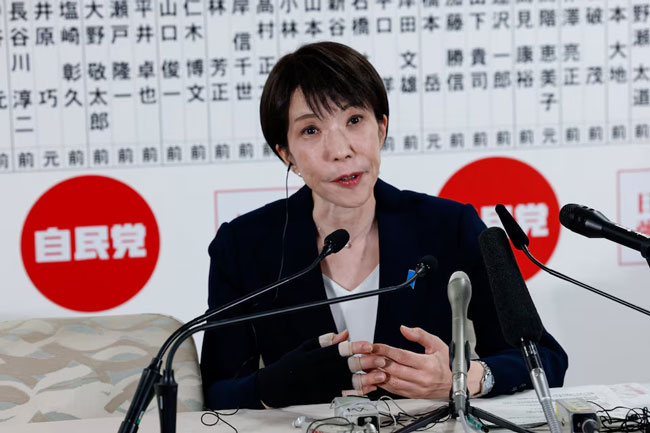
Japan’s Takaichi Secures Landmark Election Victory, Paving Way for Bold Economic and Security Agenda
Japanese Prime Minister Sanae Takaichi and her coalition achieved a historic triumph in Sunday’s parliamentary elections, setting the stage for major tax reforms and a strengthened defence posture aimed at countering China.
Takaichi, Japan’s first female prime minister who draws inspiration from Britain’s “Iron Lady” Margaret Thatcher, led the Liberal Democratic Party (LDP) to 316 of 465 seats in the lower house — the party’s strongest showing to date. With support from coalition partner Japan Innovation Party (Ishin), she now commands 352 seats, surpassing the two-thirds supermajority threshold and giving her the power to bypass opposition in the upper chamber.
“This election was about shifting economic, fiscal, and security policies,” Takaichi said in a televised statement as results came in. “With the public’s endorsement, we must implement these plans decisively.”
U.S. President Donald Trump extended his congratulations, praising her “Conservative, Peace Through Strength agenda” and announcing plans to host Takaichi at the White House next month.
The 64-year-old premier called the unusual winter snap election to leverage strong personal approval ratings since assuming LDP leadership last year. Voters have responded to her no-nonsense approach and work ethic, though her nationalistic stance and focus on military readiness have heightened tensions with China. Her promise to roll back the 8% sales tax on food has also unsettled investors worried about Japan’s already significant debt burden.
Despite record snowfall across parts of the country, citizens braved the elements to cast their ballots. In Niigata’s Uonuma town, teacher Kazushige Cho described his vote for Takaichi as a vote for unity and forward momentum.
Economic observers note that Takaichi’s sales tax plan raises questions about fiscal feasibility, though she has pledged to accelerate discussions while maintaining financial discipline. Keidanren head Yoshinobu Tsutsui welcomed the victory as a boost for Japan’s economic stability and long-term growth prospects.
Takaichi has energized younger voters, even inspiring a “sanakatsu” craze, where items associated with her — like her pink pen and handbag — have become highly sought after.
International reactions have been swift. Taiwan’s President Lai Ching-te congratulated Takaichi, expressing hope for a prosperous and secure future for Japan and the region. China, however, has responded cautiously, criticizing her stance on Taiwan and signaling displeasure at her electoral success.
Japan’s Defence Minister Shinjiro Koizumi indicated that the government will continue to pursue stronger defence policies while maintaining dialogue with China. Analysts suggest that Takaichi’s clear mandate reinforces her authority domestically and signals Beijing that efforts to marginalize her influence have failed.
With her strong parliamentary position, Takaichi is poised to implement ambitious policies that could reshape Japan’s economy, security framework, and regional relations in the coming years.