Sri Lanka
 USA
USA Canada
 India
India UK
UK UAE
UAE




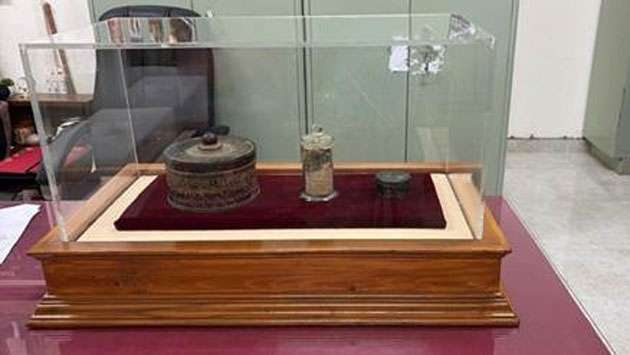
India is set to send the sacred Devnimori Relics of Lord Buddha to Sri Lanka for a historic public exposition from 4 to 10 February 2026, reaffirming the deep-rooted spiritual, cultural, and people-to-people ties between the two nations.
The exposition follows the vision outlined by the Prime Minister of India during his visit to Sri Lanka in April 2025 and stands as a powerful gesture of spiritual outreach and cultural diplomacy. The Holy Relics, currently preserved at The Maharaja Sayajirao University of Baroda in Vadodara, will return to India on 11 February 2026.
The relics will be accompanied by a high-level Indian delegation led by Gujarat Governor Shri Acharya Devvrat and Deputy Chief Minister Shri Harsh Sanghavi, along with senior Buddhist monks and government officials. In keeping with their sacred status, the relics will travel with full state honours aboard a special Indian Air Force aircraft.
During their stay in Colombo, the delegation will take part in religious, ceremonial, and official engagements, including the formal inauguration of the exposition and related exhibitions highlighting India’s rich Buddhist heritage and cultural legacy.
Gangaramaya Temple to Host the Exposition
The Holy Relics will be enshrined for public veneration at Gangaramaya Temple in Colombo, one of Sri Lanka’s most revered Buddhist institutions. Founded in the late nineteenth century by Venerable Hikkaduwe Sri Sumangala Nayaka Thera, the temple is a major centre of worship, learning, and cultural exchange.
In a country where Buddhism plays a central role in shaping cultural values and daily life, the exposition is expected to attract millions of devotees and strengthen the shared Buddhist heritage between India and Sri Lanka.
Legacy of the Devnimori Relics
The Devnimori Relics originate from the Devnimori archaeological site near Shamlaji in Gujarat’s Aravalli district. Excavated in 1957 under the guidance of archaeologist Prof. S. N. Chowdhry, the site revealed significant Buddhist remains dating back to the early centuries of the Common Era.
The relic casket, crafted from green schist, bears an inscription in Brahmi script and Sanskrit reading “dashabala sharira nilay”—meaning “the abode of the Buddha’s bodily relic.” It contains sacred ashes, silk cloth, beads, and a gold-coated silver-copper vessel, all carefully preserved in an air-tight desiccator to prevent deterioration.
A Symbol of Peace and Cultural Diplomacy
Beyond its religious importance, the exposition represents a strong expression of India’s cultural diplomacy and people-focused foreign policy. By sharing its most sacred Buddhist heritage, India reinforces the civilisational bonds between the two countries and promotes the universal values of peace, compassion, and harmony.
The Sri Lanka exposition continues India’s tradition of sharing Buddhist relics with the world, following successful exhibitions in countries such as Thailand, Mongolia, Vietnam, Russia, and Bhutan. It stands as a lasting symbol of friendship, spiritual unity, and mutual respect between India and Sri Lanka.