Sri Lanka
 USA
USA Canada
 India
India UK
UK UAE
UAE




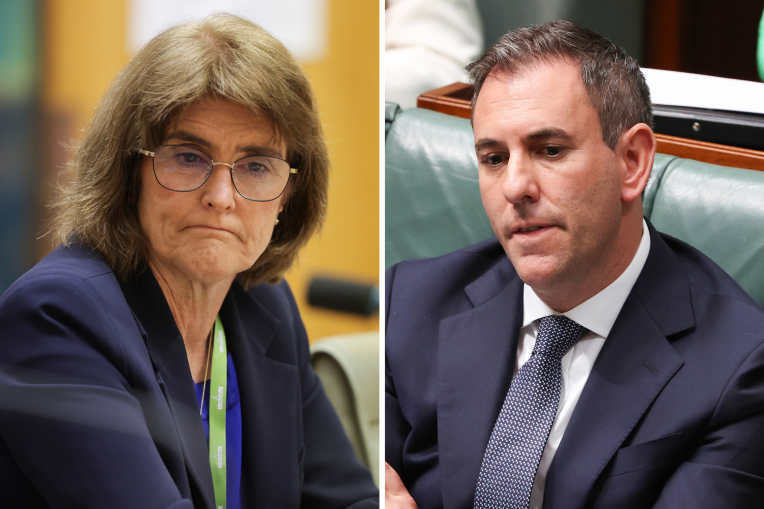
The International Monetary Fund (IMF) has warned that inflation in Australia remains stubbornly above target, urging the Reserve Bank of Australia (RBA) to maintain a cautious and data-driven approach when setting interest rates.
In its latest World Economic Outlook update, the IMF said Australia is among a small group of advanced economies experiencing “drawn-out persistence” in above-target inflation, despite signs of cooling in headline price pressures. Australia’s consumer price index eased faster than expected to 3.4 per cent in November, but remains outside the RBA’s preferred 2–3 per cent target range.
“Australia and Norway are also projected to see some drawn-out persistence in above-target inflation,” the IMF said, noting that global disinflation trends have largely stabilised since its October 2025 outlook.
The IMF’s assessment echoes earlier warnings from the Bank for International Settlements, which highlighted strong wage growth in Australia as a potential driver of renewed inflationary pressure through higher labour costs.
Inflation continues to pose a political challenge for the Albanese government, despite Prime Minister Anthony Albanese stating last year that “the worst is behind us.” Treasurer Jim Chalmers acknowledged that inflation remains a global issue, stressing that Australia is not alone in facing persistent price pressures.
“When we came to office, inflation was galloping at 6.1 per cent. It’s now much lower than that, and interest rates have been cut three times,” Chalmers said, while emphasising the global uncertainty surrounding economic conditions.
Nevertheless, the IMF urged central banks in countries where inflation remains elevated to avoid premature policy easing.
“Where inflation is still above target, a more cautious approach that maintains data dependence is warranted,” the report said.
The RBA has also expressed concern over lingering inflation. Deputy Governor Andrew Hauser recently said inflation remains “too high,” warning that demand may be running up against supply constraints in the economy.
“So demand growth has recovered largely as expected through 2025, but inflation data suggests we are hitting the limits of the supply side,” Hauser said.
Australia’s December inflation figures are due on January 28, while the RBA will release updated economic forecasts on February 3, coinciding with its first policy meeting of the year.
Despite inflation concerns, the IMF left its Australian growth forecast unchanged at 2.1 per cent for 2026, slightly below the nation’s long-term average.
Globally, the IMF warned that risks to economic growth remain tilted to the downside. While it upgraded its global growth forecast for 2026 to 3.3 per cent, it cautioned that strong gains in the US share market, driven largely by AI and IT investment, could be vulnerable to correction.
The fund noted that while current valuations are less extreme than during the 1999 dotcom bubble, a sharp repricing of technology stocks could have significant global repercussions.
Global inflation is expected to ease gradually, falling from 4.1 per cent in 2025 to 3.8 per cent in 2026, and further to 3.4 per cent in 2027, supported by softer demand and lower energy prices.