Sri Lanka
 USA
USA Canada
 India
India UK
UK UAE
UAE




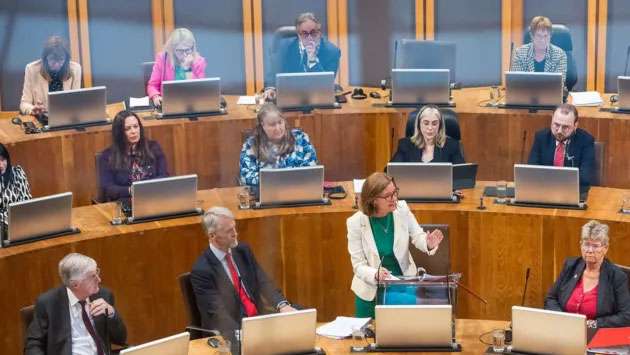
A proposed law that would make it illegal for politicians to lie during Welsh election campaigns has triggered strong concerns within the Senedd, with members warning that it could pose serious risks to free speech and democratic debate.
The bill passed its first stage in the Senedd this week, but politicians from across parties — including Labour — cautioned that without major amendments, it may fail to secure enough support to become law. Critics argue that the legislation grants “extraordinary” powers, particularly because it does not clearly define what constitutes a “false or misleading” statement.
The Welsh Labour government says the bill is intended to strengthen democracy by criminalising false or misleading statements of fact made to influence election outcomes. Ministers have defended the proposal as part of a broader effort to restore public trust in politics, following growing concerns over misinformation.
However, two cross-party Senedd committees have issued highly critical reports. The legislation committee warned that, as drafted, the bill could allow a future government to seriously restrict democratic discourse during election campaigns. Another committee said it was being asked to endorse the creation of a serious criminal offence that remains undefined and could have “life-defining repercussions.”
Several members raised concerns about the lack of public consultation, the vague scope of the offence, and the limited time available to amend the bill. Labour MSs David Rees and Alun Davies both warned against rushing through poorly drafted legislation simply to appear decisive, while Conservative MS Sam Rowlands cautioned that the bill could unintentionally restrict legitimate political debate.
Supporters of the proposal, including former Plaid Cymru leader Adam Price and Liberal Democrat Jane Dodds, argued that lying persists in politics precisely because it carries few consequences. They urged the Senedd to improve the bill rather than abandon it, stressing that voters expect action against deliberate misinformation.
Legal experts have also weighed in. Professor Jeremy Horder of the London School of Economics warned that an overly broad law could have a “chilling effect” on free speech, discouraging honest political discussion and media scrutiny.
The ban would not apply to the next Senedd election and, at the earliest, could come into force by 2030 — though ministers have acknowledged even that timeline may be unrealistic.
While there is broad support for other parts of the bill, such as recall mechanisms for misbehaving members, the section dealing with false statements will return to committee scrutiny in February. Its future now depends on whether the Welsh government can significantly revise the proposals to address growing concerns over free speech and legal clarity.