Sri Lanka
 USA
USA Canada
 India
India UK
UK UAE
UAE




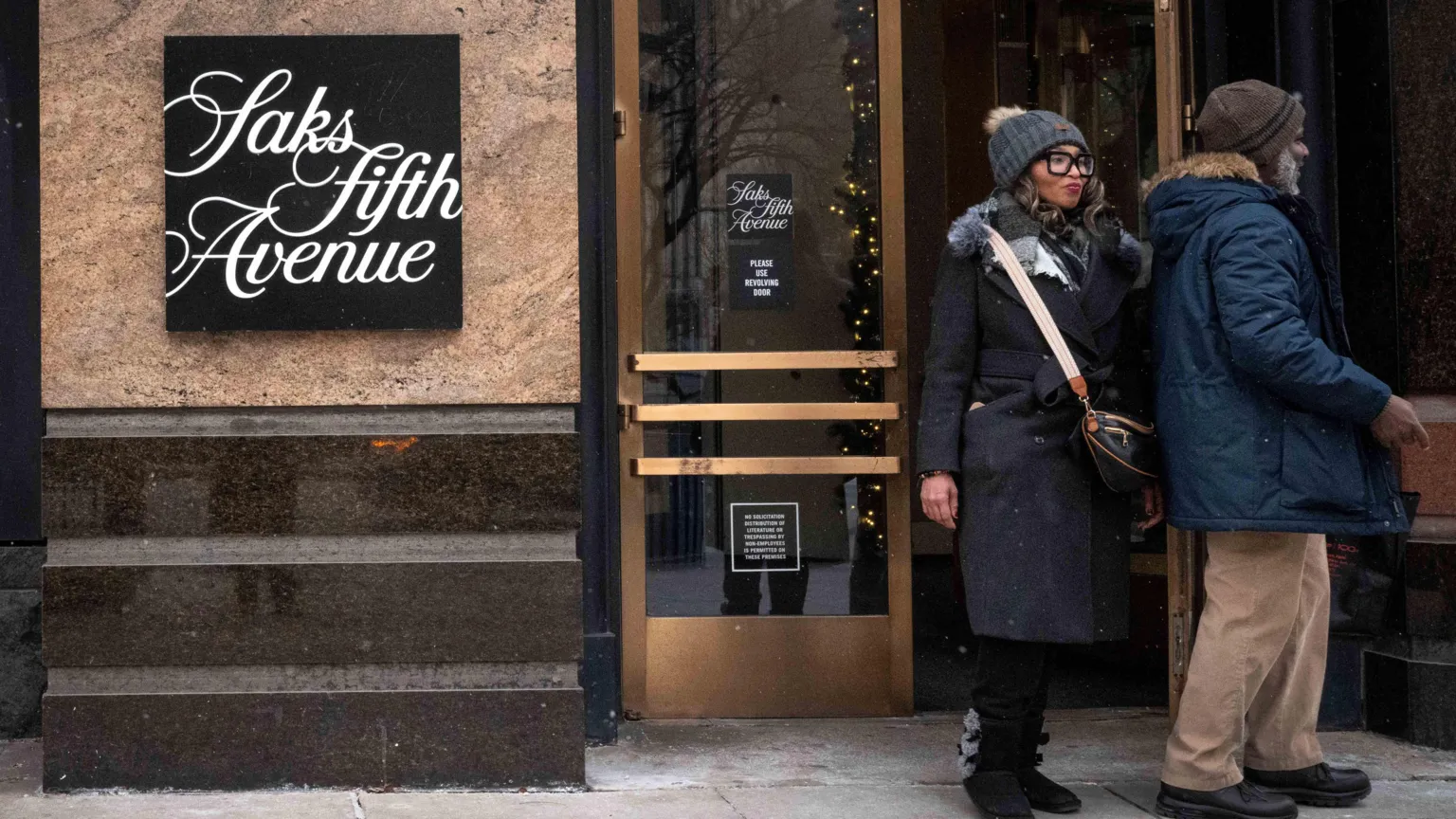
Shoppers walking into Saks Fifth Avenue’s flagship store in midtown Manhattan expect shelves filled with luxury – from Balenciaga bags to Burberry coats. But in early January, many customers were met with empty displays and a simple answer from staff: “Everything is out of stock.”
Long-time customer Penelope Nam-Stephen experienced this firsthand. After failing to find her usual Diptyque fragrance in Boston just after Christmas, she tried again in New York – only to hear that candles and diffusers were completely sold out.
Behind the empty shelves lies a much bigger problem.
Financial Trouble at the Top
Saks Global, which owns Saks Fifth Avenue, Neiman Marcus and Bergdorf Goodman, is expected to file for bankruptcy protection soon. The company has struggled ever since it acquired Neiman Marcus in 2024 in a $2.7 billion deal that was meant to cut costs and strengthen the brands.
Instead, the merger added heavy debt. Saks reportedly missed a $100 million interest payment in late December, part of more than $2.2 billion in debt taken on to fund the deal.
Sales had already been falling since early 2023 as shoppers shifted more towards online competitors. The merger failed to reverse that trend.
Vendors Stop Shipping
Saks’ biggest problem now is its relationship with suppliers. Many vendors say they have not been paid for months. Some have stopped sending products altogether.
Finance firm Hilldun, which guarantees orders for about 130 brands working with Saks, announced in November that it would no longer approve new Saks orders. One anonymous vendor said he is still owed over $20,000 for past shipments, with another $35,000 in orders frozen since October.
Without steady supply, shelves remain empty – and customers walk away disappointed.
Leadership Shake-Up
Former CEO Marc Metrick resigned in early January and was replaced by Richard Baker, the executive chairman who led the Neiman Marcus acquisition. Analysts say the company has long focused more on deals than on running a stable retail business.
“This company has exhibited all the characteristics of a train wreck,” said Mark Cohen, former head of retail studies at Columbia Business School.
Customers Losing Trust
Online shoppers are also affected. Richard Browne from North Carolina ordered discounted jeans from Saks on January 1, only to receive an email the next day saying the item was sold out and his order cancelled.
“It was just frustrating,” he said. “I’m now less likely to shop at Saks.”
While bankruptcy does not automatically mean Saks will close its doors, experts doubt whether the retailer can recover after years of debt, late payments, poor planning and broken trust with both vendors and customers.
For a brand built on luxury and reliability, being known for “out of stock” may be the most damaging label of all.