Sri Lanka
 USA
USA Canada
 India
India UK
UK UAE
UAE




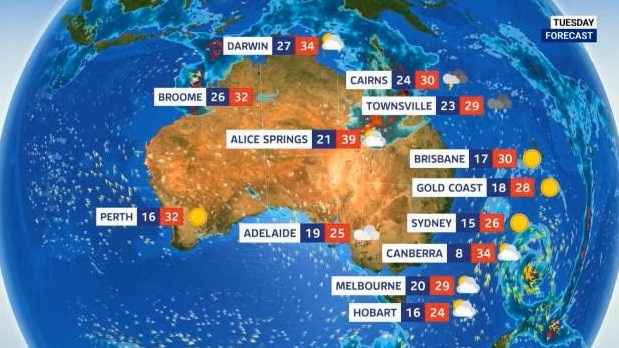
Australia is facing widespread extreme weather conditions as Tropical Cyclone Hayley intensifies off the coast of Western Australia, while North Queensland continues to endure heavy rainfall and flood threats caused by an active monsoon trough.
According to the Bureau of Meteorology, Cyclone Hayley is currently a category four system and is expected to weaken slightly before making landfall between Tuesday night and early Wednesday morning. Despite the expected weakening, the cyclone is forecast to reach category three strength ahead of landfall, posing a serious risk to coastal communities in the west Kimberley region.
Residents of the northern Dampier Peninsula, including areas such as Beagle Bay and Cape Leveque, have been warned of very destructive winds, with gusts of up to 170 kilometres per hour possible from Tuesday afternoon. Wind speeds of up to 150 kilometres per hour are also expected in areas north of Broome, potentially developing as early as midday. Authorities have cautioned that sea levels may rise above normal tides as the system approaches the coast.
Meanwhile, North Queensland remains under significant threat from intense rainfall, with meteorologists describing the situation as similar to a “landphoon” due to the prolonged monsoon conditions. Sky News meteorologist Marina Neuman warned that heavy rain is likely to continue into the new year, increasing the risk of flash flooding and river overflow.
Cities including Cairns and Townsville are forecast to receive between 80 and 120 millimetres of rain on Tuesday, with isolated areas possibly recording up to 180 millimetres. Inland regions such as Cloncurry, Julia Creek, Richmond and Winton may experience six-hour rainfall totals of up to 110 millimetres, with intense downpours reaching 150 millimetres.
Multiple flood watches and warnings are currently in effect, with major concern surrounding the Flinders River, where water levels could surpass the record flooding experienced in 2019.
Elsewhere in the country, weather conditions are comparatively calm. Sydney is expected to enjoy mostly sunny skies with a high of 25°C, while Canberra is forecast to reach 34°C. Victoria will see warm temperatures around 30°C, though extreme fire danger warnings remain in place for the Northern Country region.
Authorities continue to urge residents in affected areas to stay informed, follow official warnings, and take necessary precautions as the severe weather unfolds.