Sri Lanka
 USA
USA Canada
 India
India UK
UK UAE
UAE




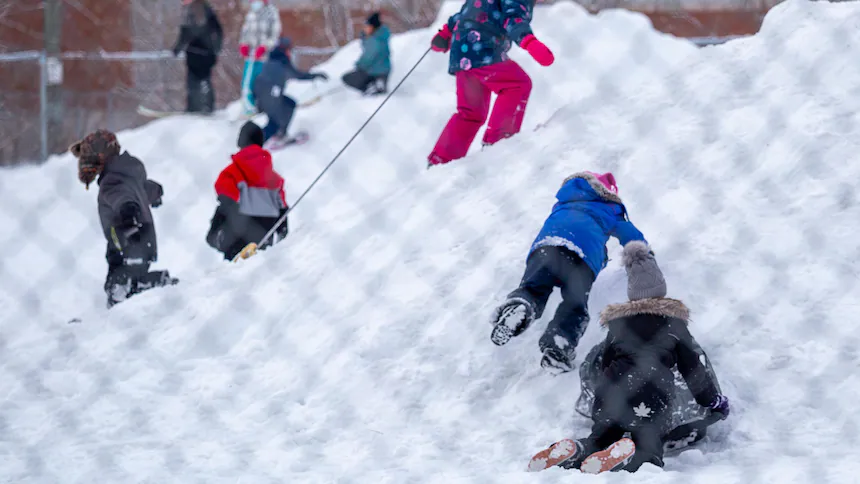
Quebec school guidelines on winter play have ignited public debate, with critics questioning whether child safety concerns are overshadowing the joy and developmental value of outdoor play.
New safety recommendations issued to several Quebec school districts regarding children playing on snow mounds have triggered widespread backlash from parents, educators, and even political leaders. The guidelines, introduced by the Union réciproque d’assurance scolaire du Québec (URASQ), outline measures for what it calls “safe sliding” during the 2025–2026 winter season.
The recommendations include limiting snow mound heights to between 1.8 and three metres, maintaining a moderate 25 per cent slope, designating specific climbing and waiting areas, preparing layout and supervision plans, and keeping daily inspection logs. While helmets are not mandatory if these conditions are met, the possibility of helmet use has drawn particular criticism.
Quebec Premier François Legault publicly questioned the practicality of such measures, calling them excessive. Speaking to Radio-Canada, he recalled his own childhood memories of playing “King of the Hill” and said introducing helmets into school playgrounds went too far. While acknowledging the importance of safety, he stressed the need for common sense.
Public reaction has been sharply divided. Many Quebecers have mocked the guidelines online, describing them as unnecessary and symbolic of a growing culture of overprotection. Some argue that playing in the snow is a fundamental part of childhood in Quebec and that minor injuries are a natural part of growing up.
However, others have pointed out that serious accidents have occurred in the past, including fatalities caused by collapsing snow tunnels, suffocation, and snowplow incidents. Authorities and municipalities have long warned about the dangers of playing in snowbanks.
Pediatrician Dr. Émilie Beaulieu, lead author of the Canadian Paediatric Society’s position on risky play, said the issue lies in finding the right balance. While hazards must be addressed, she explained that some level of risk is essential for children’s physical, emotional, and social development. Minor injuries, she added, are often part of how children learn their limits.
School administrators have attempted to ease concerns by clarifying that the guidelines are recommendations rather than strict rules. Normand Page, communications director at the Centre de services scolaire des Chênes, said schools are not expected to rigidly measure slopes or enforce every detail, but rather to ensure children can play safely.
Education Minister Sonia LeBel echoed this sentiment, urging school authorities to use judgment and focus on allowing students to enjoy winter in an appropriate environment.
The controversy has reignited discussions around “safetyism” — a term used to describe the modern tendency to overprotect children. Recent Canadian Paediatric Society guidelines emphasize that risky outdoor play is vital to children’s mental and physical health, warning that excessive safety measures may unintentionally harm development.
For many educators and school staff, concerns also remain about enforcement. With schools already understaffed, critics argue that turning simple winter play into a bureaucratic responsibility adds unnecessary pressure.
As Quebec debates where to draw the line, one question remains central: how to protect children while still allowing them the freedom to play, explore, and experience the simple joys of winter.