Sri Lanka
 USA
USA Canada
 India
India UK
UK UAE
UAE




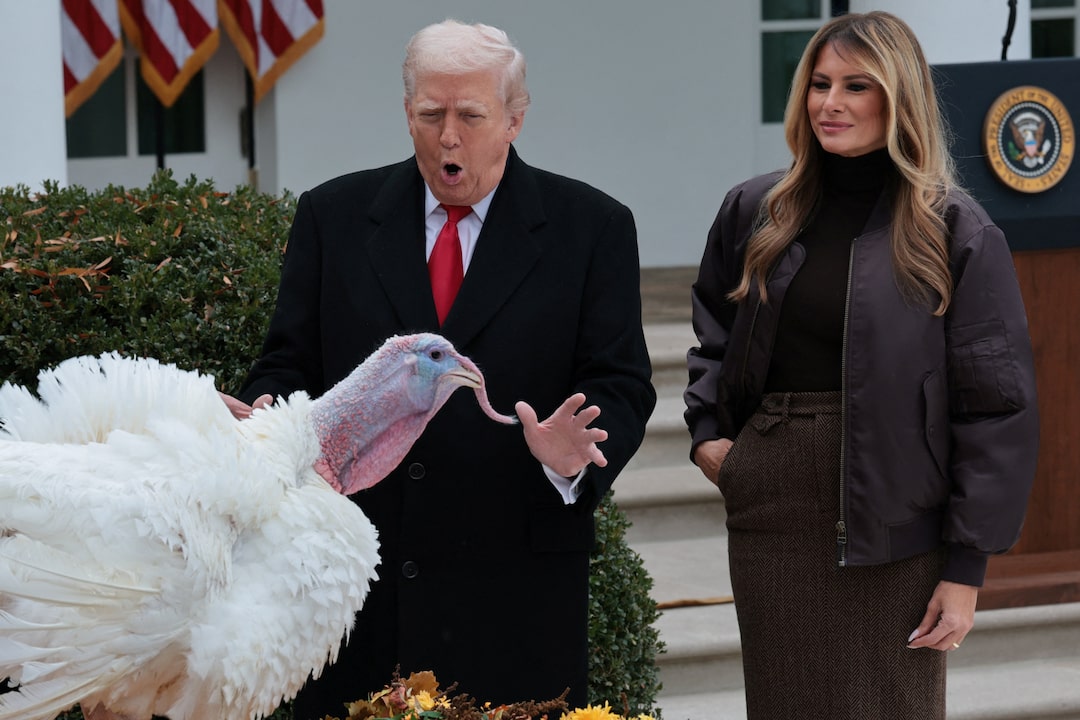
President Donald Trump upheld one of America’s most light-hearted presidential traditions on November 25, formally pardoning two Thanksgiving turkeys — humorously named Gobble and Waddle — during a ceremony at the White House.
The event, held in the Rose Garden, drew reporters, staff, and their families. Trump opened with a cheerful tone, occasionally interrupted by the birds themselves. When one turkey let out a loud gobble, Trump quipped, “See how happy he is?”, earning laughter from the crowd.
Although traditionally a playful ceremony, the president briefly pivoted into political commentary, joking that past pardons made during former President Joe Biden’s term were “hereby null and void.” The moment received mixed reaction but highlighted Trump’s signature blend of humor and politics.
This year marked the 78th anniversary of the turkey pardon, a tradition that spans 15 administrations. Gobble and Waddle were raised in North Carolina under the National Turkey Federation and Butterball CEO Jay Jandrain. Their names were chosen through an online poll conducted by the Office of the First Lady.
Standing over 50 pounds each, the birds were presented as some of the largest ever to waddle into the Rose Garden. Trump jokingly called them the first official “MAHA” turkeys.
Like many pardoned turkeys before them, Gobble and Waddle enjoyed a luxurious stay at the Willard InterContinental Hotel prior to the ceremony. They will now return to North Carolina, where they will live peacefully — far away from Thanksgiving dinner tables.
The birds belonged to a special “Presidential Flock,” trained to handle crowds, cameras, and noise for their big moment on stage. Since 2001, presidents have pardoned not just one turkey but also an official backup bird — both spared from holiday menus.
While the tradition dates back to 1947 under President Harry Truman, it only became a formal “pardon” in 1989 when President George H.W. Bush announced that the turkey would live — setting the precedent that continues today.
Despite its popularity, not everyone supports the tradition. The animal-rights group PETA criticized the event, calling it a “commercial for the cruel meat industry.” Supporters, however, view the ceremony as a charming and humorous part of American Thanksgiving culture.