Sri Lanka
 USA
USA Canada
 India
India UK
UK UAE
UAE




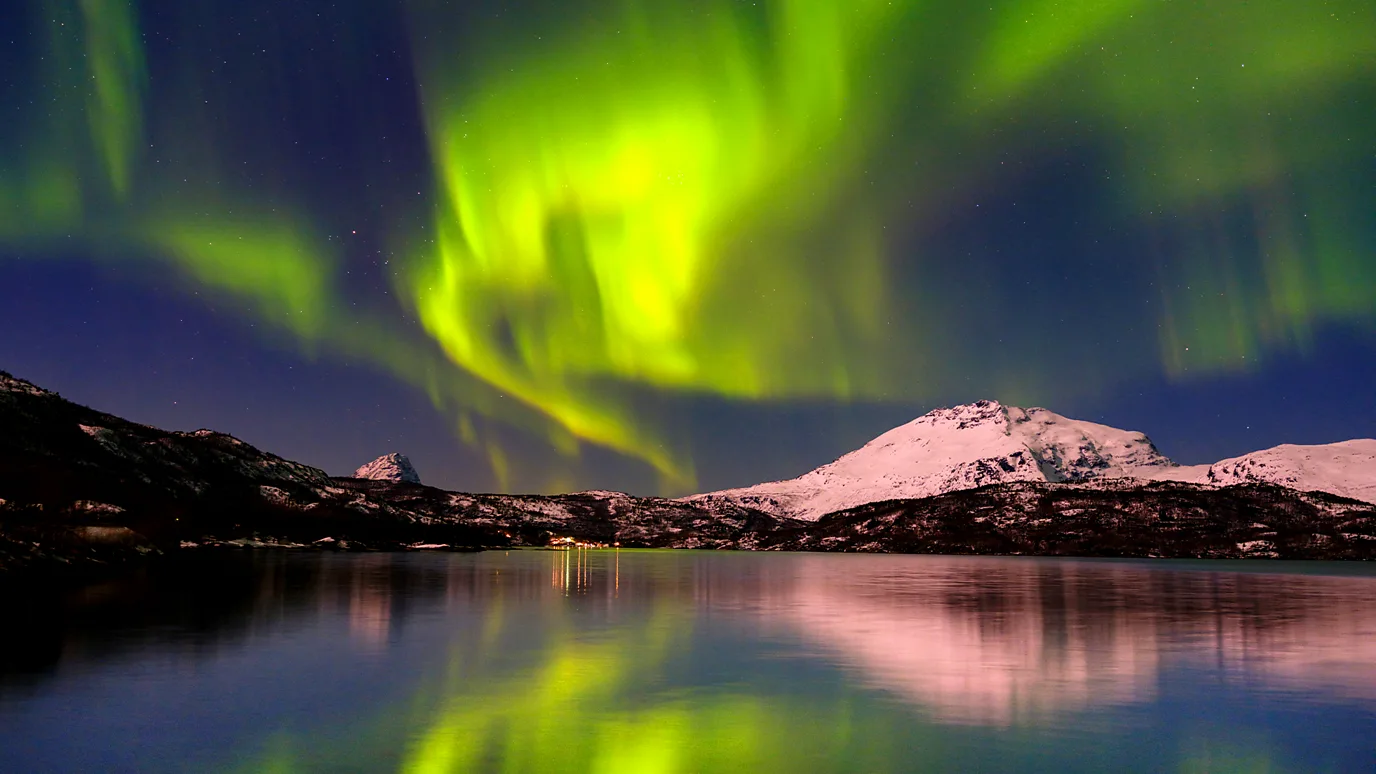
For thousands of years, the mesmerising glow of the aurora—whether the aurora borealis in the north or aurora australis in the south—has stirred human imagination, inspiring myths, omens, and cosmic theories across cultures.
Long before science revealed that auroras are caused by solar activity interacting with Earth’s magnetic field, communities worldwide created their own interpretations, often connecting the shimmering lights to gods, spirits, and political upheaval.
Auroras as Omens in History
One of the most dramatic examples comes from England in 1716, shortly after a Jacobite uprising. Strange lights streaked across the sky, prompting descriptions such as “pure flame,” “moving torches,” and even a “shower of blood.” Depending on a person’s political or religious views, these lights were seen as everything from flaming giants to armies battling in the heavens.
Some, including an English clergyman, believed the lights foretold “the fate of nations and the fall of kingdoms.”
Auroras also featured in ancient cosmologies. In Finnish Lapland, the phenomenon was believed to be caused by the swish of an arctic fox’s tail—an image preserved today in the Finnish name revontulet (“fox fires”). In Norse mythology, the aurora may have inspired Bifröst, the glowing bridge between humans and gods.
Ancient Records: Fire, Blood, and Sky Signs
New research suggests that auroras were recorded far earlier than once believed.
• Ancient Chinese texts from as early as 10th Century BCE, such as The Bamboo Annals, describe a “five-coloured” sky event—likely a powerful auroral storm.
• Babylonian and Assyrian clay tablets reference “red glows” and “red skies,” often interpreted as omens for political events.
• Aristotle’s Meteorologica (330 BCE) mentions night-time visions resembling “burning flames,” possibly an early scientific attempt to understand auroras.
Fear, Tradition, and Cultural Identity
For Indigenous peoples living closer to the Arctic Circle—Sami, Inuit, Greenlandic, Alaskan Native communities—the aurora has long been a central part of cultural identity.
Some Sami communities viewed the lights with fear, cautioning children to remain quiet or cover their hair so the lights would not “catch” them.
In Alaska, children were warned that the aurora might play football with their heads—a frightening story told to ensure they returned home before dark.
In many First Nations traditions, the lights symbolise ancestors dancing in the sky, guiding or watching over the living.
Sounds, Spirits, and “Shimmering Dancers”
The aurora borealis has many names— from the Shetland term mirrie dancers to the Sami term guovsahasat, meaning “the lights you can hear.” Reports of faint crackling or swishing noises, once dismissed as imagination, are now believed to be caused by electrostatic discharges close to the Earth’s surface.
From Myth to Science
The modern name aurora borealis came from Galileo Galilei in 1619, combining Aurora, the Roman goddess of dawn, with Boreas, the Greek god of the north wind.
Over time, scientific understanding grew, especially as scholars examined ancient records to study past geomagnetic storms and solar cycles—knowledge now crucial in predicting disruptions to modern technology.
Yet myths continue even today, such as the popular (but likely invented) belief that Japanese tourists try to conceive under the Northern Lights to bring good luck.
A Phenomenon Blending Science and Story
From political warnings to spiritual symbols, the aurora has remained one of the few natural wonders capable of inspiring both scientific inquiry and profound storytelling. Though now explained by solar physics, its cultural legacy remains as dazzling as its colours.