Sri Lanka
 USA
USA Canada
 India
India UK
UK UAE
UAE




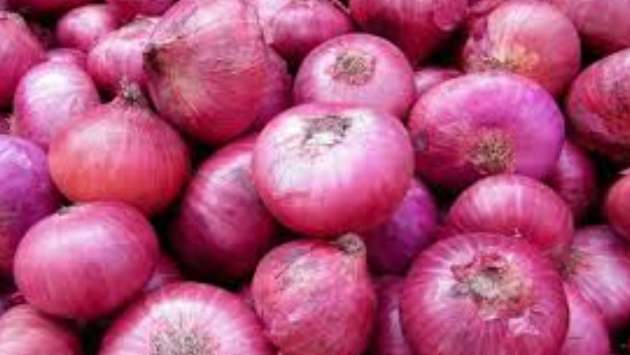
The Sri Lankan government has announced plans to introduce a stable price for big onions, aiming to protect farmers from market volatility while ensuring affordability for consumers.
The government has taken steps to establish a fair and stable pricing mechanism for big onions, according to the President’s Media Division (PMD). This decision follows a high-level discussion held at the Presidential Secretariat under the leadership of Agriculture Minister K. D. Lal Kantha and Trade Minister Wasantha Samarasinghe.
Minister Lal Kantha highlighted that while long-standing systems exist to safeguard paddy farmers, no similar programmes have been implemented for other key crops. He emphasized that this is the first time a government has prepared a comprehensive plan to address the challenges faced by big onion farmers, noting that the administration aims to uplift all farmers and enhance their overall quality of life.
During the meeting, officials stressed the need to prioritise farmer welfare while also keeping onions affordable for consumers. The Minister underscored the importance of relying on accurate data to guide all decisions and policies.
The discussion included detailed assessments of production targets and pricing structures. The Department of Agriculture presented a report outlining strategies for sustainable big onion cultivation and marketing. Sri Lanka currently aims to increase big onion production from 17% in 2025 to 22% in 2026 and 27% in 2027, marking a planned expansion in the sector.
Long-term proposals included improving storage capacity and support facilities for farmers. Producers raised concerns about unpredictable price fluctuations caused by wide market gaps, noting that despite risks, they continue cultivation with the hope of stable income. They requested government support to continue big onion farming as a viable income-generating industry.
Minister Lal Kantha added that most farmers operate on small landholdings, and such realities must be considered when calculating production costs and setting policies. He also encouraged all farmers to register with the Department of Agrarian Development to ensure timely government intervention during emergencies.