Sri Lanka
 USA
USA Canada
 India
India UK
UK UAE
UAE




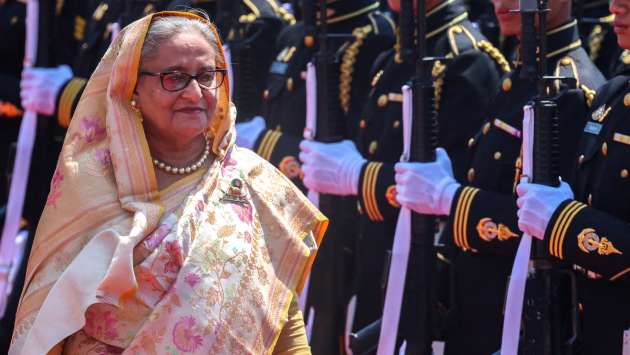
Lead: Bangladesh’s ousted prime minister Sheikh Hasina has been sentenced to death in absentia after a tribunal in Dhaka found her guilty of crimes against humanity linked to last year’s deadly crackdown on a student-led uprising.
Bangladesh’s international crimes tribunal has delivered a landmark verdict, sentencing deposed prime minister Sheikh Hasina to death for ordering a violent crackdown on anti-government protesters during the 2024 student uprising. The three-judge bench convicted her of murder, extermination, torture and other inhumane acts.
Announcing the verdict, Justice Golam Mortuza Mozumder said Hasina had “committed crimes against humanity” by ordering the use of drones, helicopters and lethal weapons against demonstrators. Hasina denied all accusations, calling the tribunal a “politically motivated charade.”
The former leader was tried in absentia after fleeing Bangladesh in August 2024. She has since lived under protection in India, which has declined to extradite her despite repeated requests. Her co-accused, former home minister Asaduzzaman Khan, was also sentenced to death.
Family members of slain protesters wept in court as the verdict was read. Hasina’s empty defendant’s box symbolized her continued defiance. In an earlier audio message, she stated: “Let them announce whatever verdict they want. Allah gave me this life and only he can end it. I will still serve my people.”
Security in Dhaka was heightened ahead of the ruling, with police, military and paramilitaries guarding the tribunal. Authorities even issued “shoot-on-sight” orders against individuals suspected of throwing explosives or setting vehicles on fire. A small blast near the court on Monday caused panic and road blockades.
The uprising, now referred to as the “July Revolution,” began as a student protest but evolved into a nationwide movement against Hasina’s increasingly authoritarian rule. Her 15-year tenure had long been criticized for alleged corruption, enforced disappearances and human rights abuses.
The UN estimates that up to 1,400 civilians were killed during last year’s unrest, marking the worst political violence in Bangladesh since the 1971 independence war.
Hasina’s prosecution was a central pledge of the current interim government led by Nobel laureate Muhammad Yunus. Chief prosecutor Mohammad Tajul Islam built the case presented to the tribunal, fulfilling a key demand of the protest leaders who ousted Hasina.