Sri Lanka
 USA
USA Canada
 India
India UK
UK UAE
UAE




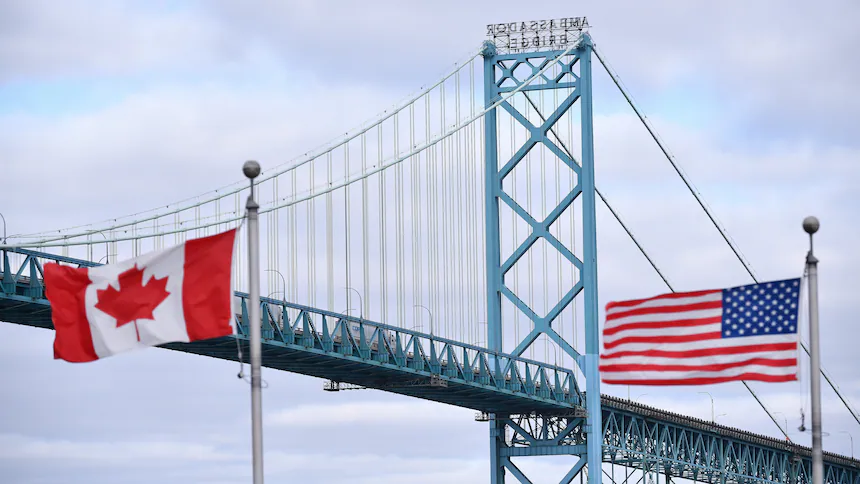
A growing number of Canadians are choosing to avoid travel to the United States — and it’s taking a serious toll on the U.S. tourism industry, which is projected to lose $5.7 billion USD in 2025 alone.
The United States is facing a major decline in tourism revenue as Canadians — once the largest group of international visitors — continue to stay away. According to a new U.S. Travel Association report, international tourism spending is expected to fall by 3.2% in 2025, representing a $5.7 billion loss compared to the previous year.
The report attributes much of this decline to the sharp drop in Canadian visitors, a trend that began after President Donald Trump returned to office, reignited trade tensions, and made controversial remarks referring to Canada as the “51st state.”
Data from October shows that Canadian travel to the U.S. has fallen 24% by air and 30% by land compared to last year — marking ten consecutive months of decline. Canadians typically account for 28% of all international visitors to the U.S., or roughly 20 million of 72.4 million travelers in 2024.
Experts warn that the downturn threatens thousands of tourism jobs in states heavily reliant on Canadian visitors.
“Reduced hotel occupancy will hit local employment and tax revenue,” said Usha Haley, a management professor at Wichita State University.
President Trump downplayed the impact, insisting that the issue “will get worked out,” though he continues to escalate trade disputes with Canada. His administration recently ended trade talks and threatened new tariffs, further straining bilateral relations.
Meanwhile, the U.S. now faces a travel trade deficit nearing $70 billion, as more Americans travel abroad while fewer international visitors come in — a reversal of the country’s long-standing tourism surplus.
🇨🇦 Canadians Staying Home — or Going Elsewhere
An Angus Reid poll found that 70% of Canadians feel uncomfortable traveling to the U.S. this winter, citing political tensions, border restrictions, and solidarity with Canada amid trade conflicts.
Even long-time “snowbirds” like Rena Hans of Toronto, who owns a condo in Florida, are refusing to go.
“I can’t vote in the U.S., but I can vote with my dollars,” Hans said, explaining that she plans to vacation in Costa Rica, Turks and Caicos, China, and Taiwan instead.
Adding to the deterrents, the Trump administration’s new registration rule requires Canadians staying longer than 29 days to register, be photographed, fingerprinted, and pay $30, which many consider intrusive.
🏞️ Border States Offer Discounts to Woo Canadians Back
Tourism boards across Montana, New York, and Washington are launching special promotions to revive cross-border travel. The latest, Discover Kalispell in Montana, introduced a Canadian Welcome Pass offering discounts at hotels and restaurants through January 2026.
“Canadians have always been part of our community,” said Diane Medler, Executive Director of Discover Kalispell. “We just wanted to provide a little incentive — we’ve missed them.”
Despite these efforts, tourism operators say the losses remain steep. At My Place Hotel in Kalispell, Canadian bookings are down 40% year-over-year, prompting a 26% discount for Canadian guests.
With no sign of political détente and a record tourism deficit looming, analysts warn that the U.S. could continue to feel the sting of its northern neighbor’s absence well into 2026 — despite hopes of a rebound tied to the FIFA World Cup and the 250th U.S. anniversary celebrations.