Sri Lanka
 USA
USA Canada
 India
India UK
UK UAE
UAE




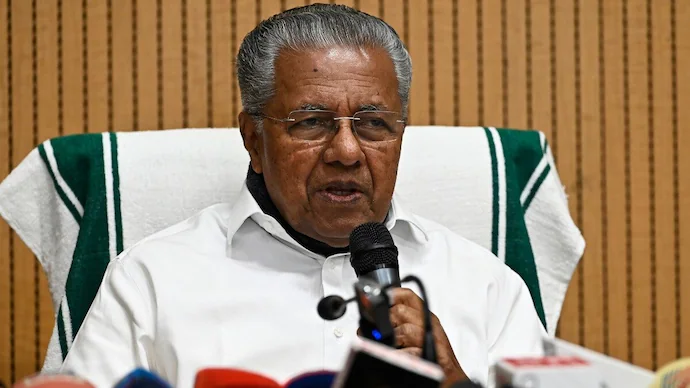
Kerala has made history as the first state in India to eliminate extreme poverty, marking the culmination of a four-year mission that focused on families most vulnerable to deprivation and exclusion.
In a landmark achievement, the southern Indian state of Kerala declared itself free from extreme poverty on November 1, becoming the first state in the country to do so. The declaration was made by Chief Minister Pinarayi Vijayan, following a comprehensive four-year programme led by local authorities under the state’s Extreme Poverty Eradication Project.
The initiative identified more than 64,000 families living in severe deprivation—those who had fallen through the cracks of existing welfare schemes. Unlike traditional poverty metrics focused solely on income, Kerala’s programme considered multiple indicators such as access to housing, food security, healthcare, and education.
“These were the most disempowered and voiceless families,” said Minister MB Rajesh, who oversees Local Self Government and Excise. “Their survival depended on direct state support and collective community intervention.”
Over the past four years, Kerala’s government departments collaborated to provide targeted assistance, including food rations, housing, medical treatment, and educational scholarships for children. The approach reflected Kerala’s longstanding reputation for social welfare and human development, which consistently places it among India’s top-performing states.
Globally, the World Bank defines extreme poverty as living on less than US$3 per day. Despite Kerala’s success, the challenge remains significant on a broader scale — with more than 830 million people worldwide estimated to live under this threshold in 2025.
At the national level, India has also made strides, reducing extreme poverty to 2.3% in the 2023 financial year, down from 16.2% a decade ago. However, experts warn that inequality and malnutrition remain entrenched. India ranked 102nd out of 123 countries on the 2025 Global Hunger Index, with 32.9% of children under five showing signs of stunted growth.
“Despite impressive progress, deprivation and poverty are still mass realities,” noted Professor R. Ramakumar from the Tata Institute of Social Sciences, emphasizing that economic inequality continues to widen. Studies show that the top 1% of Indian households control 40% of the nation’s wealth, while the bottom 5% struggle daily for survival.
Analysts suggest that sustainable poverty eradication will depend on greater access to education and quality employment. For many families, however, the immediate priorities remain basic — securing enough food and a stable home.
“Even if people have work, they are still not doing well,” said Sujata Sawant, president of the Adarsh Foundation. “Poverty still exists here — but Kerala’s success shows what can be achieved with consistent, targeted support.”