Sri Lanka
 USA
USA Canada
 India
India UK
UK UAE
UAE




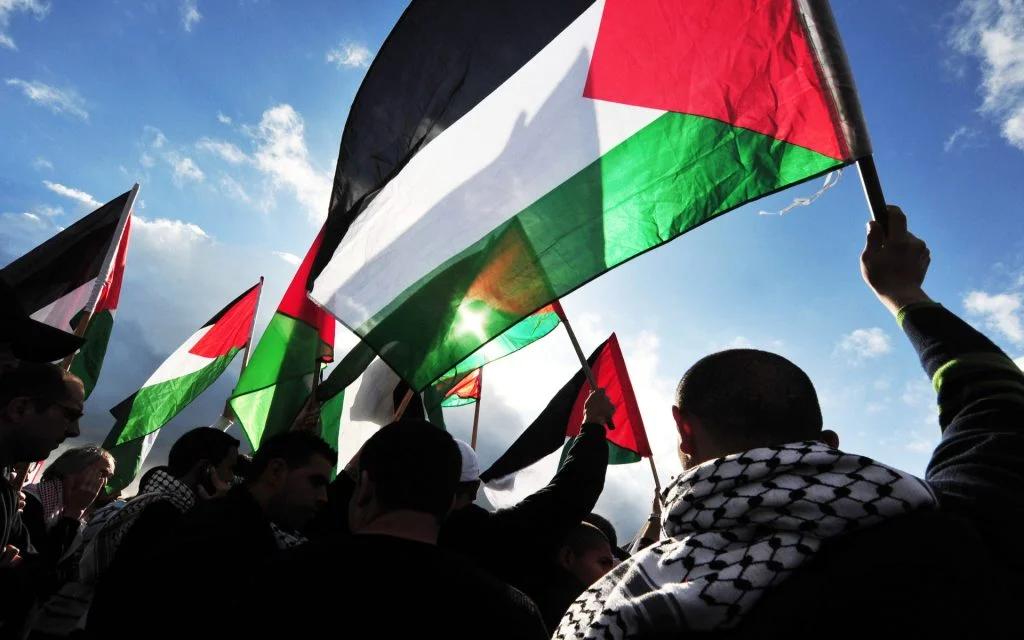
Britain, Canada and Australia formally recognised a State of Palestine on Sunday, reversing decades of unwillingness to accept Palestinians as a sovereign nation until their conflict with Israel was permanently settled and breaking sharply with the United States. The three nations became the biggest countries to recognise Palestine, acting in coordination with France, which is expected to make a similar declaration on Monday at the United Nations.
Their embrace of Palestinian statehood is momentous shift in long-standing diplomatic positions, and reflects the grave consternation in many capitals over Israel’s war in Gaza.
Britain, Canada and France. the first members of the G-7 major economies to take such a step, are some of the biggest traditional Israel supporters-and U.S. allies-to recognise Palestine.
Canadian Prime Minister Mark Carney, Australian Prime Minister Anthony Albanese and British Prime Minister Keir Starmer announced the decisions in rapid succession Sunday.
Starmer, in particular, has faced growing pressure from the British public and his own Labour Party to take a tougher stand against Israel’s conduct Gaza. The growing list of nations recognising Palestine, which is expected also to include Australia after the U.N. gathering, reflect how the bloodshed and upheaval following the October 7, 2023, Hamas attacks on Israel have shaken up long-static diplomatic positions.
Britain’s shift has special resonance given its controversial history governing what is now Israel and the Palestinian territories in the early 20th century under a mandate from the League of Nations – after making what critics say were unclear and contradictory promises to Arabs and Jews in the region.
The U.K. has long urged the sides to negotiate an agreement that establishes two sovereign States in the still-contested area but held off recognising a State of Palestine in advance of a settlement.
But growing public revulsion over Israel’s ongoing siege in Gaza and Israel’s recent steps away from a negotiated settlement pushed the UK Government to act. Huge demonstrations in support of the Palestinians routinely fill streets in cities across Britain. More than one-third of Starmer’s cabinet had called for the move and more than 130 members of parliament from Starmer’s Labour Party signed a recent letter in support.
Starmer had vowed in July that he would take the action before the UN’s September General Assembly meeting unless Israel took “substantive steps” to improve the humanitarian crisis in Gaza. Israeli attacks have killed more than 64,000 Palestinians, according to Gaza health officials, who do not differentiate between civilian and combatant casualties.
Starmer said he would not recognize Palestine unless Israel agreed to a ceasefire deal with Hamas, committed to a two-state solution and ruled out annexing the occupied West Bank. None of those conditions were met, British officials said. Rather, in recent weeks, Israel has renewed its assault on Gaza City and launched an attack targeting Hamas officials in Doha, Qatar, the U.S. ally hosting ceasefire negotiations.
Israel, along with Trump and numerous other administration officials, has blasted the growing movement of governments that recognize a state of Palestine as “rewarding Hamas” for the terrorist group’s surprise attacks that killed about 2,000 Israelis and displaced tens of thousands more.
Britain’s announcement, though expected, provided a striking coda to Trump’s pomp-and-comity-filled visit that concluded Thursday evening. The prime minister, speaking beside Trump at a news conference Thursday, said accepting Palestine as a state was needed to address the “intolerable” ongoing destruction and depravation in Gaza and to steer the broader conflict back toward a sustainable long-term settlement.
The issue was the only major point of disagreement to emerge publicly during the carefully choreographed two-day visit. At the news conference, Trump acknowledged “a disagreement with the Prime Minister on that score” but in less harsh language than from some of his senior aides or from Israeli Prime Minister Benjamin Netanyahu, who had accused Starmer of “appeasing” Hamas.
“A jihadist state on Israel’s border TODAY will threaten Britain TOMORROW,” Netanyahu said in a statement on X.
Starmer said the move should be seen as “part of that overall package which hopefully takes us from the appalling situation we’re in now to the outcome of a safe and secure Israel, which we do not have, and a viable Palestinian state.”
Starmer denied that extending statehood to more than 5 million Palestinians in the West Bank and Gaza was a reward for Hamas.
He condemned the group as “a terrorist organization who can have no part in any future governance in Palestine.” In response to that, Trump patted him on the back approvingly, suggesting Britain’s position will not cause a significant conflict with Washington.
(The Washington Post)