Sri Lanka
 USA
USA Canada
 India
India UK
UK UAE
UAE




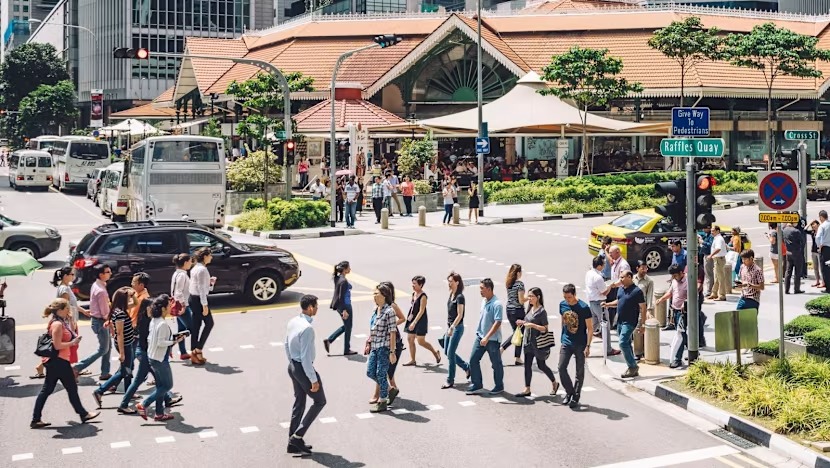
While the unemployment rate for residents across most age groups fell in the second quarter of 2025, the rate for those below the age of 30 rose from 5.4 per cent in March to 5.7 per cent in June.
This was the first time in 2025 that unemployment rates for those under 30 went up, according to the Ministry of Manpower’s (MOM) second quarter labour market report released on Wednesday (Sep 17).
The report also showed that while unemployment rates for all other education groups declined in the second quarter, degree holders saw a small increase from 2.8 per cent in March to 2.9 per cent in June.
For senior residents above the age of 60, the unemployment rate also inched up from 2.3 to 2.5 per cent in the same time period.
Buffered by declines in other age groups, the quarterly unemployment rate for all residents, defined as Singaporeans and permanent residents, inched down from 2.9 per cent in March to 2.8 per cent in June.
The overall unemployment rate, which considers non-residents, was unchanged at 2 per cent.
The MOM’s quarterly report comes amid growing job anxieties among young graduates.
Commenting on the labour market report, Manpower Minister Tan See Leng said Singapore’s labour market remains resilient, with total employment continuing to expand despite global uncertainties.
The government was already watching the second quarter “very closely” as it marked the first quarter since the announcement of the United States Liberation Day tariffs on Apr 2, said Dr Tan.
Thus far, the government has pre-emptively introduced several support measures, such as the Graduate Industry Traineeships programme, and will continue to keep a close eye on the impact of US tariffs on the global economy, he said.
The traineeships are part of a new government-funded scheme offering up to 800 traineeship positions across the private and public sectors from October.
MOM noted that even with the increase, the latest resident unemployment rate for those below 30 remained within the pre-recessionary range of between 4.9 and 6.1 per cent.
As at June 2025, 51.9 per cent or 9,300 of this year’s fresh graduates had found jobs, up from 47.9 per cent of the previous cohort, said Mr Ang Boon Heng, director of MOM’s manpower research and statistics department, in a media briefing held ahead of the launch of the report.
An improvement in the long-term unemployment rate from 1.2 per cent in March to 1.1 per cent in June also suggests “no prolonged job search difficulties” for residents below 30, Mr Ang added.
Long-term unemployment is defined as being jobless for at least 25 weeks.
Other age groups saw improvements in this indicator or held steady from the first quarter.
With that, the overall resident long-term unemployment rate was unchanged at 0.9 per cent in June, indicating “continued stability in job prospects”, MOM said.
There are around 30,000 entry-level jobs available for fresh graduates, noted Dr Tan during a visit to CapitaLand Group’s Tanjong Pagar headquarters. He said the company operates in sectors such as real estate and fund management that continue to be hiring for roles like operation planners and quantity surveyors.
A list provided by the MOM showed 4,270 top entry-level job vacancies across 15 sectors as of June 2025. These top entry-level PMET vacancies were defined as roles with a salary range of S$2,300 (US$1,802) to S$5,000.
Sectors with the biggest number of vacancies include public administration and education, health and social services, construction, as well as information and communications.
For example, in the public administration and education sector, there are 510 job openings for research and development managers and 350 vacancies for research officers, based on data collated by the MOM through its surveys, job advertisement sites and the Workforce Singapore’s MyCareersFuture portal.
In response to a question on the traineeship programme, Dr Tan said local tertiary education institutions are doing a good job to prepare graduates for the working world.
But the world is also “moving at a breakneck speed” with job requirements evolving quickly, he said, citing the rapid development of AI as an example.
“The whole idea of adding the graduate (traineeship) programme is to provide an added buffer of exposure for them to build networks and immerse themselves with industry experts on the job, for them to also (be aware) of the pace of the transformation is happening,” said the minister.
“We should view it as an intermediate step to bring them and ease them into the working world.”
He added that compared to previous years, there are an additional 2,400 fresh graduates entering the job market this year. This could be due to uncertainties around the global economy, which has led to more fresh graduates deciding to enter the workforce instead of pursuing further studies or taking a gap year.
The traineeship programme, alongside other initiatives such as job fairs organised by various agencies, will aim to provide “significant, broad-based support” for all fresh graduates.
“At the same time … if the next quarter and the first quarter of 2026, things continue to worsen, we have drawer plans in place that we will activate to support fellow Singaporeans,” said Dr Tan. CNA