Sri Lanka
 USA
USA Canada
 India
India UK
UK UAE
UAE




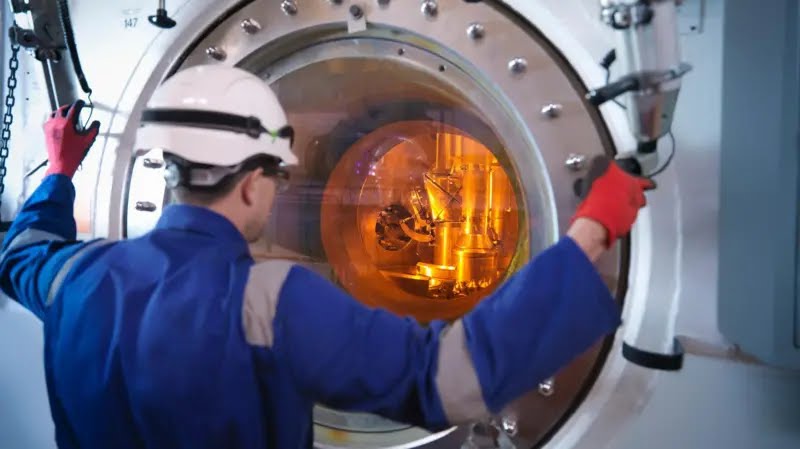
The United Kingdom and the United States are preparing to sign a landmark agreement aimed at accelerating the rollout of nuclear power projects, a move that could create thousands of jobs while strengthening Britain’s energy security.
The deal, known as the Atlantic Partnership for Advanced Nuclear Energy, is expected to be finalized during US President Donald Trump’s upcoming state visit. Both governments hope it will unlock billions of pounds in private investment and halve the time it takes for nuclear projects to secure regulatory approval—from as long as four years to just two.
Under the agreement, safety approvals already granted in one country could be recognized in the other, reducing duplication and speeding up the construction process.
The UK is already pushing forward with its nuclear programme, which includes small modular reactors (SMRs) designed by Rolls Royce. In addition, a major commercial deal will be signed between US-based X-Energy and Britain’s Centrica, the owner of British Gas, to build up to 12 advanced modular reactors (AMRs) in Hartlepool. Unlike SMRs, which use water as a coolant, AMRs use gases such as helium, offering a different technological approach.
According to the UK government, the Hartlepool project alone has the potential to generate enough clean electricity to power 1.5 million homes and create up to 2,500 skilled jobs.
Energy Secretary Ed Miliband hailed the announcement, saying:
“Nuclear will power our homes with clean, homegrown energy. The private sector is building it in Britain, delivering growth and well-paid, skilled jobs for working people.”
However, critics remain cautious. Greenpeace UK warned that nuclear projects often suffer from cost overruns and delays, pointing to the soaring costs of the Sizewell C project in Suffolk, which have risen from £20 billion to £38 billion.
Despite concerns, the UK government insists that modular reactor technology—designed for factory production and on-site assembly—offers a faster, more cost-effective route to scaling up nuclear capacity.
Prime Minister Sir Keir Starmer has reaffirmed his ambition for the UK to reclaim its position as a global nuclear leader. Nuclear power, which once generated a quarter of the UK’s electricity in the 1990s, has declined to just 15%, with several reactors nearing decommissioning.
This new partnership with Washington is seen as a critical step in reversing that trend and meeting the UK’s pledge, alongside 30 other nations, to triple nuclear capacity by 2050.