Sri Lanka
 USA
USA Canada
 India
India UK
UK UAE
UAE




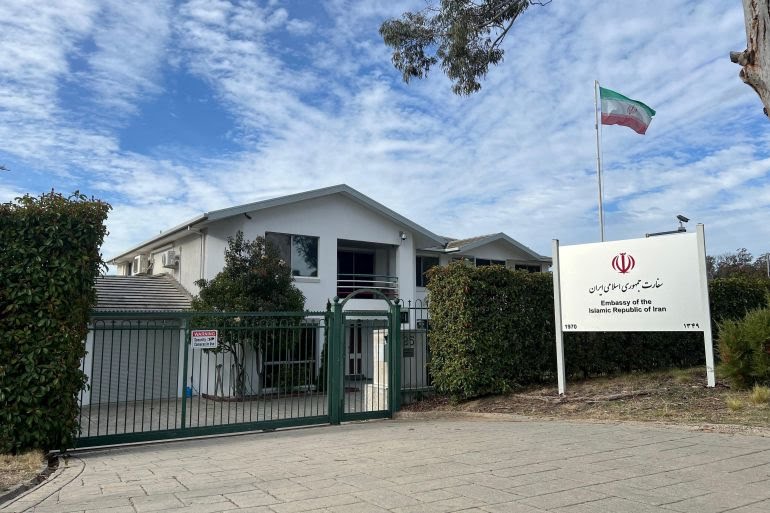
Australia has rejected claims from Israel that Prime Minister Anthony Albanese expelled Iran’s ambassador under pressure from Israeli Prime Minister Benjamin Netanyahu.
On Tuesday, Albanese announced that “credible intelligence” showed Iran had directed at least two anti-Semitic attacks against Jewish communities in Sydney and Melbourne. The Australian government ordered Iran’s ambassador, Ahmad Sadeghi, to leave the country.
But Israel quickly suggested it had spurred the decision. Israeli government spokesperson David Mencer told ABC that the move followed a “forthright intervention” by Netanyahu, who had accused Albanese of being a “weak politician who betrayed Israel and abandoned Australia’s Jews” after Canberra’s pledge to recognise a Palestinian state in September.
Australian Home Affairs Minister Tony Burke dismissed the claim, calling it “complete nonsense” in an interview with ABC Radio.
Iran has strongly denied involvement in the attacks. Foreign Ministry spokesperson Esmaeil Baghaei said the accusations were “absolutely rejected” and suggested the move was retaliation for Australia’s recent criticism of Israel. He warned that “any inappropriate and unjustified action on a diplomatic level will have a reciprocal reaction.”
Meanwhile, the Jewish Council of Australia said it was “shocked” at the alleged Iranian involvement, but urged politicians and media not to exploit the incidents to stigmatise Palestine solidarity protesters.
The developments come at a moment of heightened tension, as Canberra balances its recognition of Palestine with security concerns over growing anti-Semitism, while managing its strained relations with both Israel and Iran.