Sri Lanka
 USA
USA Canada
 India
India UK
UK UAE
UAE




The United States has officially imposed a 50% tariff on Indian-origin goods effective Wednesday, August 27, in response to India’s continued imports of discounted Russian oil.
The U.S. Department of Homeland Security announced that the new levies apply to all Indian goods entered for consumption or withdrawn from warehouses after 12:01 AM EDT.
President Donald Trump defended the move, arguing that India’s trade with Russia indirectly funds the Ukraine war. He emphasized the tariff as a tool to advance peace negotiations with Moscow.
🇮🇳 Modi Calls for Self-Reliance
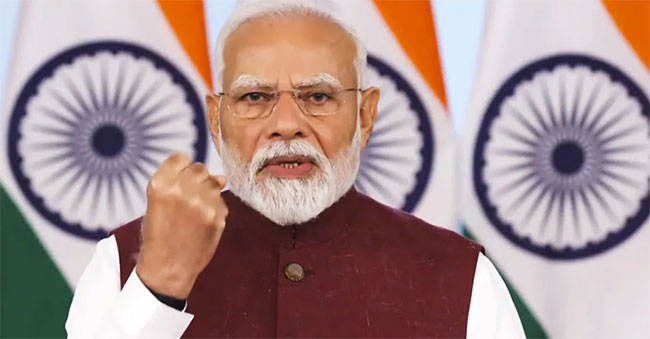
In Ahmedabad, Indian Prime Minister Narendra Modi strongly condemned the tariff, pledging to protect the interests of farmers, herders, and small-scale industries. He urged citizens to prioritize Swadeshi (local) goods, insisting India would resist external pressure.
Foreign Minister S. Jaishankar confirmed negotiations with Washington are ongoing but gave no indication that India will stop buying Russian oil.
📉 Impact on Indian Exports
The tariff threatens nearly 55% of India’s $87 billion exports to the U.S., with sectors like textiles, processed foods, leather, and marine products most at risk. Orders have already been paused in anticipation of losses, while competing countries such as Vietnam, Bangladesh, and China are poised to benefit.
In Tiruppur, Tamil Nadu, garment factories that supply almost a third of India’s U.S. exports have begun scaling down operations. In Surat, Gujarat, diamond polishing hubs are reducing workdays, with some workers placed on unpaid leave.
🌍 Wider Fallout
India, which exports about 60% of its shrimp to the U.S., could see duties rise above 60%, endangering aquaculture farmers. Analysts warn that the move may shave 0.8 percentage points off India’s economic growth this year and in 2026.
The Indian Rupee slipped 0.2% to 87.75 per USD, while benchmark indices dropped 0.7% after the announcement.
Negotiations between the two nations collapsed earlier this year after the U.S. demanded greater access to India’s agricultural market—something Modi has firmly rejected.
Despite mounting pressure, Modi reaffirmed India’s commitment to self-reliance, diversification, and stronger ties with Russia and China.