Sri Lanka
 USA
USA Canada
 India
India UK
UK UAE
UAE




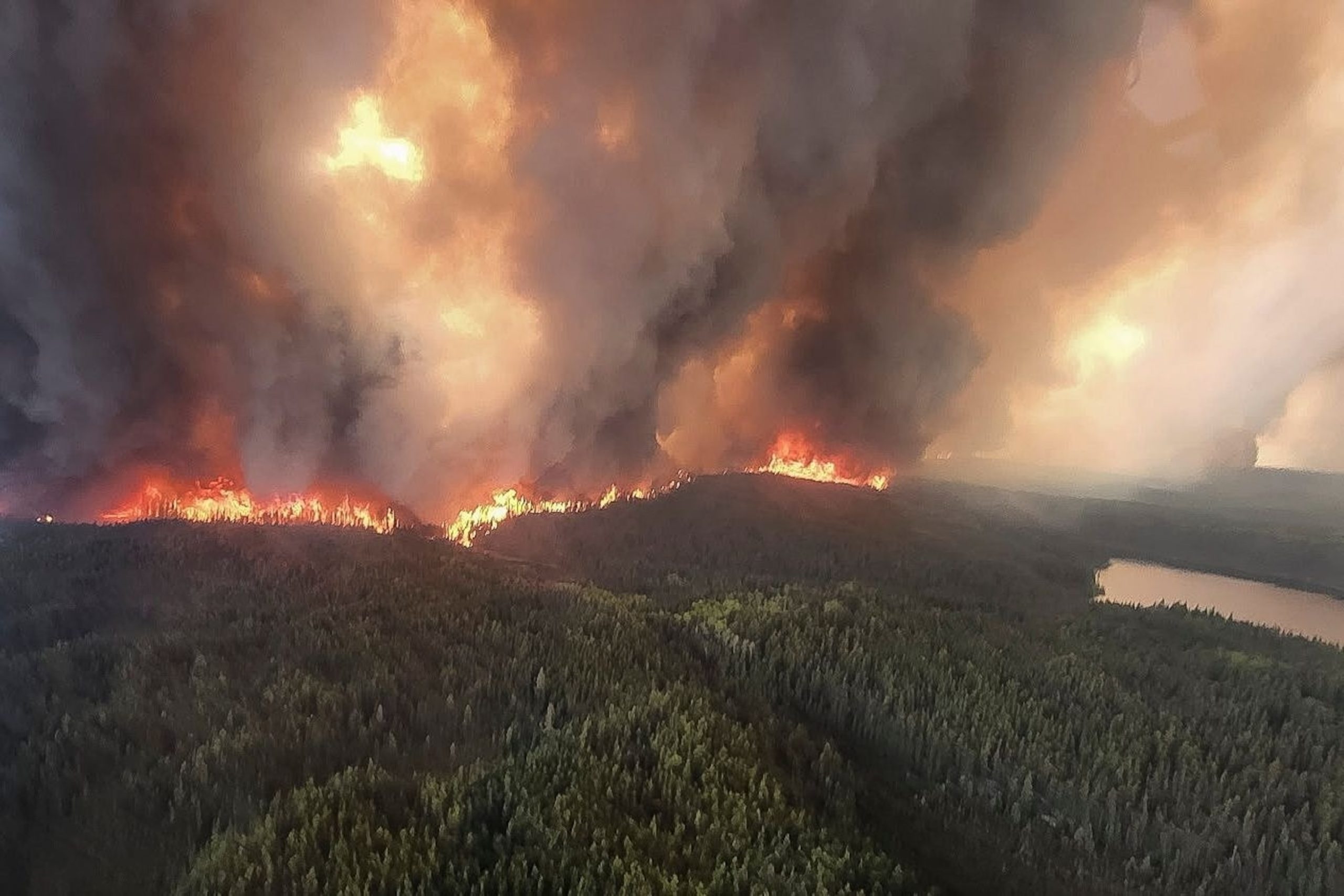
Canadian officials are bracing for challenging days ahead as Saskatchewan and Manitoba face worsening wildfires, driven by hot and dry weather conditions forecasted for the weekend. Both provinces declared states of emergency this week as thousands of residents were forced to evacuate.
In Manitoba, the entire city of Flin Flon has been evacuated except for emergency crews, as a major blaze threatens the community. “It’s been another challenging day here in Manitoba,” Premier Wab Kinew told the BBC, describing efforts involving water bombers and helicopters battling the flames amid thick smoke, complicating evacuations.
Currently, 22 fires are burning across Manitoba, with four classified as out of control. Thousands of displaced residents from northern Manitoba are sheltering in Winnipeg, many of them tired and stressed after long journeys.
Meanwhile, Saskatchewan is contending with 15 active wildfires, seven of which are not contained. Evacuations have affected 16 communities, and the Canadian Armed Forces were deployed overnight to assist in safely evacuating the northern First Nations community of Pukatawagan.
In response to the crisis, 125 firefighters from the US and international crews are joining efforts to battle the blazes. However, meteorologists warn that conditions may worsen. Danielle Desjardins of Environment and Climate Change Canada noted that the forecast remains hot and dry, with temperatures in Saskatchewan already soaring above 30°C (86°F) and extreme dryness since March. A cold front is expected to bring wind but little rain, creating conditions ripe for the fires to spread.
Smoke from the wildfires has triggered air quality alerts across parts of Canada and the US Midwest. Advisories are in effect for regions including Michigan, Minnesota, and Wisconsin, affecting an estimated 22 million Americans. Residents, especially sensitive groups, are warned of unhealthy air conditions through the weekend. In northern Minnesota, air quality is projected to reach levels “unhealthy for everyone” through Monday.
The growing smoke has even raised concerns about potential impacts on the upcoming G7 Summit in Alberta. Wildfires continue to burn in northern Alberta, with seven of the 50 active fires classified as significant threats.
Canada experienced its worst wildfire season on record in 2023, with over 42 million acres burned—more than double the previous record. While last year’s fires primarily affected Alberta, British Columbia, the Northwest Territories, Nova Scotia, Ontario, and Quebec, this year’s most severe blazes have been centered in Saskatchewan and Manitoba.
Although wildfires occur naturally, the UN’s climate body, the IPCC, warns that climate change is increasing the likelihood of extreme weather conditions that fuel these fires.