Sri Lanka
 USA
USA Canada
 India
India UK
UK UAE
UAE




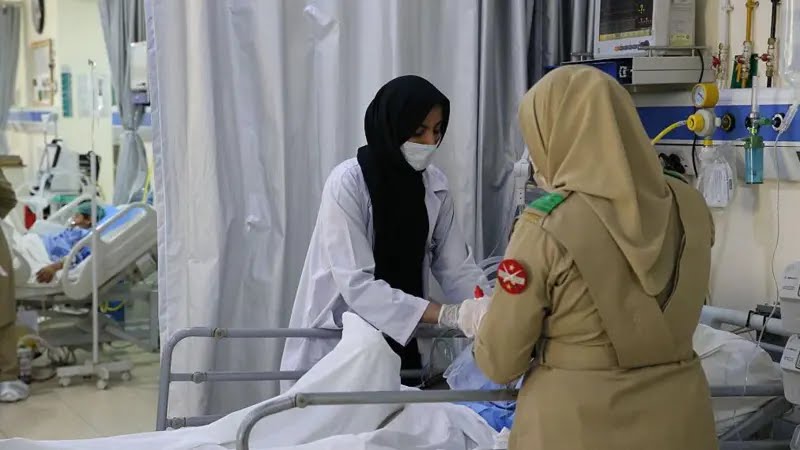
In the heart of Quetta, Sergeant Nasir Mehmood sat in the waiting room of Balochistan’s largest military hospital, his heart heavy with fear. His 14-year-old son, Mohammad Ahmad, had survived a deadly bombing on an army school bus in Khuzdar.
“The ground fell from beneath my feet when I heard the news,” Nasir said. “I ran to the hospital, but all I could hear were children screaming. I couldn’t stop searching for my son.”
The attack struck at around 7:40 a.m. on Wednesday, injuring dozens and killing at least six children and two others. Many of the most critically injured were airlifted to the Combined Military Hospital, where doctors reported extensive trauma, burns, and fractures. No group has yet claimed responsibility for the attack.
Pakistan has accused India of involvement, a claim strongly denied by Delhi. Tensions between the two nations have been simmering since a two-week conflict involving drone attacks, missiles, and artillery fire left dozens dead. This fragile ceasefire now appears threatened by the attack in Balochistan.
News outlets in Pakistan have broadcast images of the wreckage, scattered backpacks, and the faces of young victims — mostly girls aged 12 to 16. Public anger is mounting, with accusations of an “Indian terror campaign” fueling fears of renewed violence.
Pakistan’s Minister of Information, Attaullah Tarar, pointed to a history of alleged Indian proxy involvement in Balochistan. However, India insists that Pakistan has long harbored militants who target Indian-administered Kashmir. The conflict was reignited last month after 26 people, mostly tourists, were killed in Pahalgam, India.
Pakistan has called for an independent investigation into the Pahalgam attack, but Tarar dismissed the need for one in Balochistan. “We are the victims here. There’s a history. We have evidence,” he claimed, though he provided no concrete proof.
Balochistan has long been plagued by violence, with insurgent groups like the Balochistan Liberation Army (BLA) targeting government forces and infrastructure. Pakistan, along with several Western countries, designates the BLA as a terrorist organization. In March, 21 people, mostly off-duty security personnel, were killed in a train siege in the region.
Activists in Balochistan, however, accuse Pakistani security forces of widespread human rights abuses, including enforced disappearances and illegal detentions of ethnic Baloch people. Amid these tensions, Tarar suggested the need for “faceless courts” to protect judges and prosecutors from militant threats.
The military has labeled the school bus attack as “India’s provocation,” distancing it from the Baloch insurgency. Diplomatic efforts are underway, but the impact on the already fragile ceasefire between India and Pakistan remains uncertain.