Sri Lanka
 USA
USA Canada
 India
India UK
UK UAE
UAE




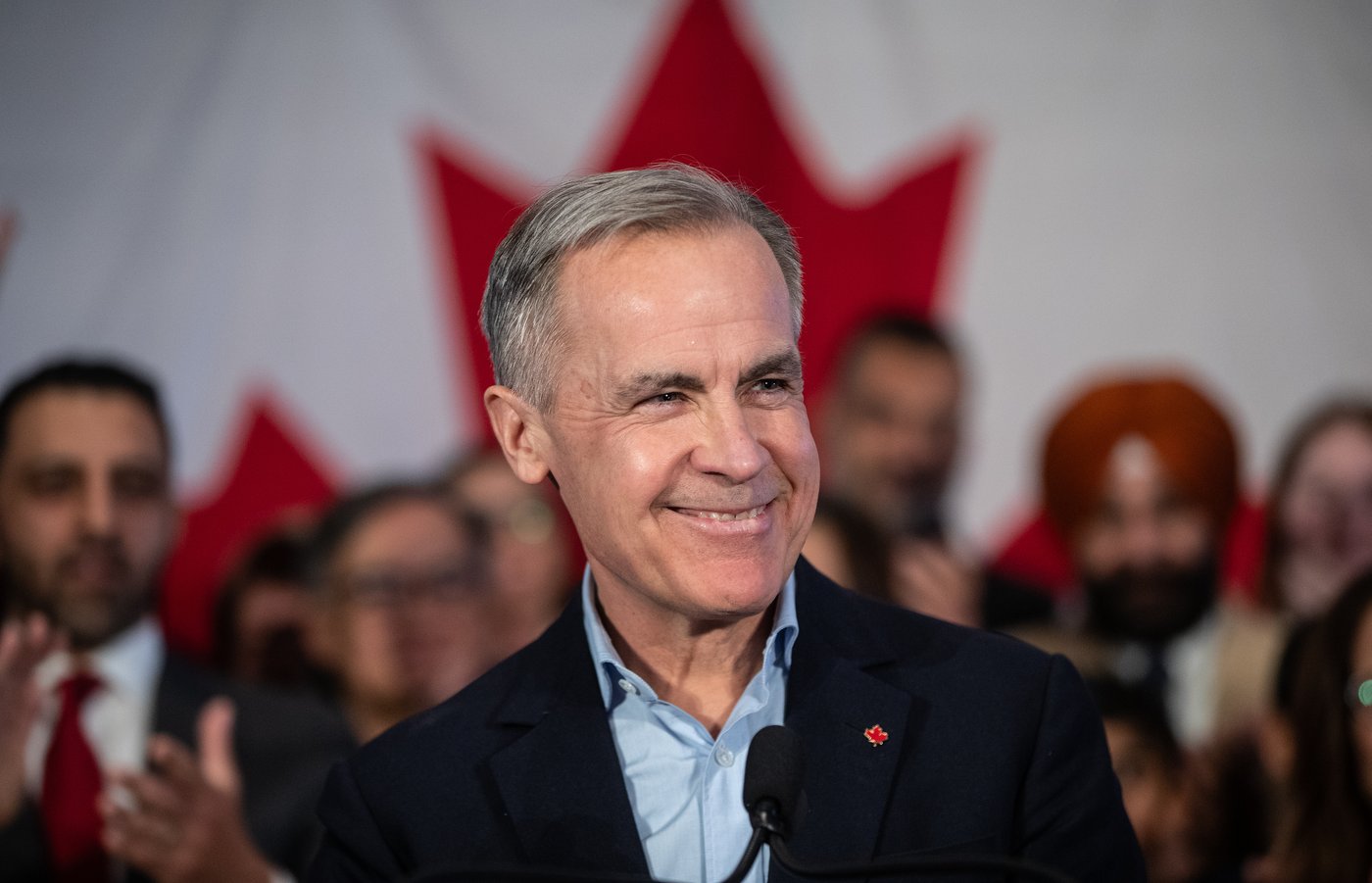
As Canada faces unprecedented threats from the Trump administration, Mark Carney steps into the political spotlight, offering steady leadership rooted in global experience and a commitment to national resilience.
Mark Carney, the new prime minister of Canada, is seeking a full term in Monday’s federal election, anchoring his campaign on President Trump’s threats against the nation.
Carney’s connection to Canadian politics has been long in the making. Despite years overseas, he previously turned down offers to join political cabinets. However, when Trump’s aggressive rhetoric towards Canada — including tariffs and annexation threats — plunged the country into uncertainty, Carney emerged as a fitting leader for the crisis. In a matter of weeks, he rose to become prime minister, replacing Justin Trudeau.
At 60, Carney brings a lean, athletic presence and a sharp mind, often showing a professorial tone with flashes of dry humor. While he lacks Trudeau’s crowd-swaying charm and Conservative leader Pierre Poilievre’s polished political touch, Carney’s campaign message is clear: in these unstable times, Canada needs his calm, experienced hand.
“If it’s not a crisis, you wouldn’t be seeing me,” Carney told a local news outlet in early March, days before officially becoming prime minister. “I’m most useful in a crisis.”
Since Trump’s election, Canada has faced a slew of tariffs and hostile threats, unsettling its economy and security. Carney’s campaign focuses on these challenges, promising a comprehensive new deal with the United States and positioning himself as the protector of Canada’s sovereignty.
“Donald Trump wants to break us so America can own us. They can’t have it,” he declared at a recent rally.
Using his international reputation, Carney has been building alliances abroad, visiting London and Paris, and pursuing a military industry agreement with the European Union. Born in the Northwest Territories and raised in Edmonton, Carney studied at Harvard and Oxford before joining Goldman Sachs. His leadership during the 2008 financial crisis as governor of the Bank of Canada, and later the Bank of England during Brexit, has fortified his crisis-management credentials.
Still, his global career has opened him to attacks from critics, who paint him as an elitist disconnected from ordinary Canadians. His tenure at Brookfield Asset Management has drawn scrutiny for offshore tax practices and Chinese investments, and Carney has faced tough questions about his private wealth. Despite the criticism, he maintains that he has complied with all ethics rules.
Campaigning as a centrist pragmatist, Carney has distanced himself from Trudeau’s more ideological approach, repealing the unpopular carbon tax soon after taking office, despite once championing green finance initiatives. His leadership style — described as firm and sometimes sharp, known among Bank of England staff as “getting tasered” when he dismissed ideas — shows his decisiveness.
Nonetheless, many admire his competence and mastery of complex issues. Economist Anil Kashyap praises Carney’s thorough preparation, noting his ability to view problems from multiple angles.
Polls show Carney’s Liberals slightly ahead of the Conservatives, suggesting that many Canadians find reassurance in his steady demeanor and progressive values.
At a rally in Surrey, British Columbia, supporters praised Carney’s financial expertise and commitment to inclusion. “From a financial perspective, he knows what he’s doing,” said one voter. Another added, “Mark Carney is uniquely qualified — he’s the adult in the room.”
#MarkCarney
#CanadaElection
#DonaldTrumpThreats
#CanadianLiberalParty
#CanadaUSRelations
#GlobalLeadership