Sri Lanka
 USA
USA Canada
 India
India UK
UK UAE
UAE




Iran has firmly dismissed a recent U.S. proposal that would require it to rely solely on imported uranium for its civil nuclear programme, stating that it has the right to enrich uranium domestically under international law.
Speaking in China, Iranian chief negotiator Abbas Araghchi underscored Iran’s commitment to its sovereign rights under the Nuclear Non-Proliferation Treaty (NPT), emphasizing that the country must not be treated as an exception. “Iran has a right to be treated with equal respect… including the ability to produce fuel for our nuclear power plants,” he said.
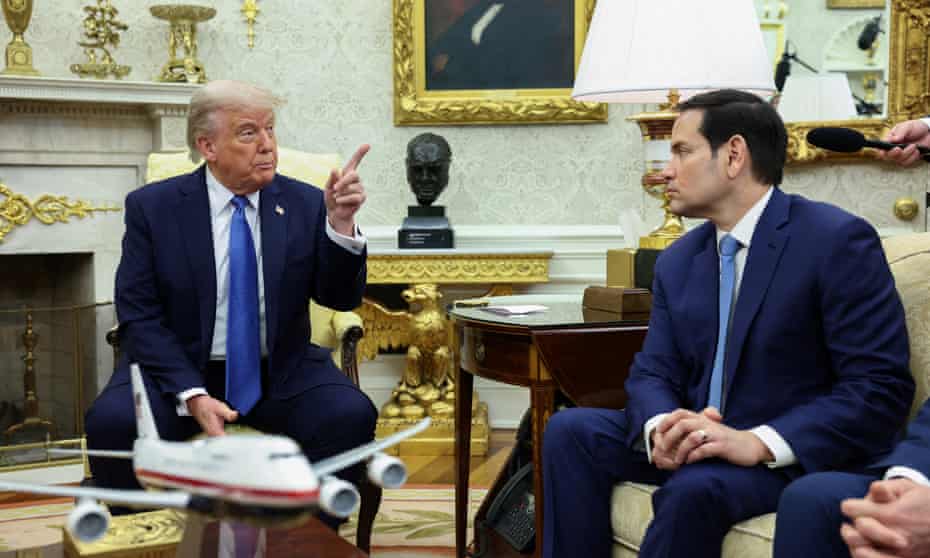
The disagreement marks the first major stumbling block in the revived nuclear negotiations, which aim to prevent Iran from acquiring a nuclear weapon in exchange for relief from U.S.-led economic sanctions. Talks are currently underway in Oman, where U.S. Secretary of State Marco Rubio introduced a new proposal aimed at striking a balance between hawks who demand the complete dismantling of Iran’s nuclear infrastructure and moderates who support a monitored, limited enrichment program.
Rubio, speaking on The Free Press podcast, proposed that Iran be allowed to operate a civilian nuclear programme—provided it imports all enriched uranium, similar to other countries with nuclear energy capabilities.
Araghchi pushed back, stating, “If America’s only demand is that Iran not have nuclear weapons, this is an achievable demand. But if it has impractical and illogical demands, we will run into problems.”
In remarks intended for the Carnegie Endowment for International Peace, Araghchi highlighted Iran’s compliance under the 2015 nuclear deal—officially known as the Joint Comprehensive Plan of Action (JCPOA)—which included the “most intrusive inspection regime the world has ever seen.”
He also outlined Iran’s long-term ambitions to construct at least 19 more nuclear power plants, adding that American companies would be welcome to bid on these projects. “Tens of billions of dollars in potential contracts are up for grabs,” he stated, suggesting that this could help revive the U.S. nuclear industry.
However, skepticism persists on the American side. Former CIA Director William Burns acknowledged the difficulty in getting Iran to abandon all domestic enrichment. “In the comprehensive agreement, enrichment was capped at under 5%, which is suitable for civilian use,” he said. “But achieving zero enrichment will be a major challenge.”
Meanwhile, the U.S. has appointed Michael Anton—a former speechwriter and fashion commentator with no technical nuclear expertise—to lead a 12-member technical team under chief negotiator Steve Witkoff. Anton previously served on the national security staff during Trump’s first term.
Andrea Stricker of the Foundation for the Defense of Democracies warned against a weak interim deal, saying, “Unless you’re dismantling all of Iran’s infrastructure and stockpiles permanently, you’re not really getting much.” She also noted that Congress may resist ratifying a deal that falls short of full denuclearization.
With tensions simmering and negotiations entering a critical phase, the path to a sustainable nuclear agreement remains fraught with political and technical hurdles.